
read the article

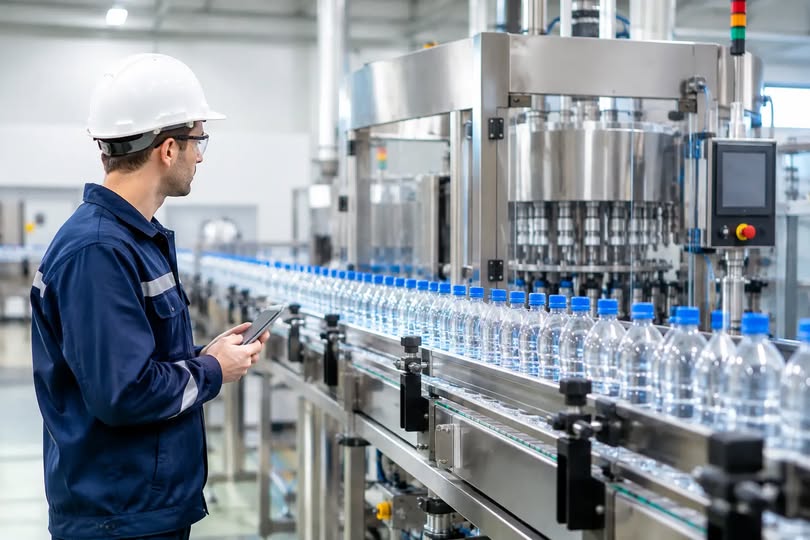
Operating an automatic PET blow molding machine requires more than simply pressing the start button. To achieve stable production, consistent bottle quality, low material waste, and maximum equipment efficiency, operators must understand the machine's working principles, production procedures, process parameters, quality standards, and basic troubleshooting methods.
For PET bottle manufacturers, operator training is one of the most important factors influencing production efficiency. Even a high-performance automatic bottle blowing machine cannot deliver its full potential if operators do not understand preform heating, stretching, blowing pressure, mold cooling, and production monitoring.
At TAIXIANG MACHINE, we specialize in manufacturing automatic PET blow molding machines and providing complete PET bottle production line solutions. Our engineering approach focuses not only on machine performance but also on helping customers establish reliable production processes through professional installation, commissioning, operator training, and long-term technical support.
This technical guide explains how to train operators systematically, from understanding machine components to managing daily production, identifying bottle defects, and maintaining stable manufacturing performance.
1. Why Is Professional Operator Training Important for Automatic Blow Molding Machines?
An automatic PET stretch blow molding machine integrates several mechanical, electrical, pneumatic, and thermal systems. These systems must operate together in a precisely coordinated sequence to transform PET preforms into finished bottles.
Unlike simple production equipment, automatic bottle blowing machines require operators to understand the relationship between multiple process variables. A small adjustment to the heating profile or stretching sequence can influence bottle wall thickness, transparency, dimensional accuracy, and overall product strength.
Insufficient operator training can result in several production problems:
- Uneven PET preform heating and inconsistent bottle formation.
- Excessive material waste caused by incorrect process settings.
- Unstable production output and unnecessary machine downtime.
- Frequent equipment alarms caused by incorrect operation.
- Increased compressed air and electricity consumption.
- Improper handling of molds, heating systems, and high-pressure components.
- Longer troubleshooting and production changeover times.
Professional training helps operators recognize abnormal production conditions early, follow standardized operating procedures, and maintain consistent production quality.
TAIXIANG Engineering Insight: Operator training should be based on the actual combination of machine model, bottle design, PET preform specification, blow mold, and auxiliary equipment. A standard training program must be adapted to the customer's specific production requirements.
2. Understand the Working Principle of an Automatic PET Blow Molding Machine
Before operating the equipment independently, every operator should understand how an automatic PET bottle blowing machine works.
A typical two-stage PET stretch blow molding process converts an injection-molded PET preform into a finished bottle through controlled heating, mechanical stretching, and high-pressure air expansion.
2.1 PET Preform Feeding
The production process begins with PET preforms being loaded into the automatic feeding and conveying system.
Operators should understand how the preform feeding system works and how to identify common material problems, including:
- Deformed or damaged preforms.
- Incorrect preform neck specifications.
- Foreign materials or surface contamination.
- Inconsistent preform weight or dimensions.
- Incorrect preform orientation or feeding problems.
Using the correct preform specification is essential. The preform weight, neck finish, body dimensions, and material distribution must match the bottle design and mold configuration.
2.2 Infrared Preform Heating System
The heating system is one of the most important components of a PET blow molding machine.
Automatic PET blowing machines commonly use multi-zone infrared heating systems to heat the preform body to a suitable processing condition while protecting the neck finish from excessive heat.
Operators must understand:
- The function of each heating zone.
- How infrared heating lamps transfer heat to PET preforms.
- The importance of consistent preform rotation.
- How heating temperature distribution affects bottle wall thickness.
- The function of cooling fans and neck protection systems.
- How to identify damaged lamps and abnormal heating conditions.
One important training principle is that operators should not simply increase the overall heating temperature when bottle quality becomes unstable.
Instead, they should understand the temperature distribution along the preform. Different sections of the preform may require different heating conditions depending on the bottle geometry and material distribution.
2.3 Stretching and High-Pressure Blowing
After heating, the preform is transferred into the blow mold. The clamping system closes the mold, and the stretching rod extends the heated PET material vertically.
Compressed air is then introduced to expand the stretched preform against the internal surface of the mold cavity.
Operators should understand the following process elements:
- Stretch rod movement and positioning.
- Pre-blowing timing and pressure.
- High-pressure blowing sequence.
- Blowing valve operation.
- Mold cooling time.
- Mold opening and bottle discharge timing.
These operations must be synchronized. Incorrect timing can result in uneven material distribution, incomplete bottle formation, or unstable bottle dimensions.
2.4 Bottle Cooling and Discharge
After the bottle has expanded against the mold cavity, sufficient cooling time is required to stabilize its shape.
The machine then opens the mold and transfers the finished bottle to the discharge system.
Operators should check whether bottles are discharged smoothly and whether any deformation occurs during removal or transportation.
Understanding the complete production sequence allows operators to identify which process stage may be responsible when a quality problem occurs.
3. Teach Operators to Identify the Main Machine Components
Before practical operation, operators should receive hands-on instruction about the major machine components and their functions.
TAIXIANG automatic PET bottle blowing machines integrate mechanical structures, intelligent PLC control, infrared heating, pneumatic systems, and precision mold clamping technology.
| Machine Component | Main Function | What Operators Must Learn |
|---|---|---|
| Touchscreen HMI | Controls production settings and monitors machine status. | Recipe selection, parameter monitoring, alarm identification. |
| PLC Control System | Coordinates machine operations. | Production sequence and alarm interpretation. |
| IR Heating System | Heats PET preforms. | Heating zones, lamp inspection, temperature distribution. |
| Stretching System | Stretches the heated preform. | Stretch rod movement and timing. |
| Blowing Valve System | Controls compressed air delivery. | Pressure monitoring and abnormal air supply identification. |
| Mold Clamping Unit | Closes and locks the blow mold. | Safety interlocks and mold condition inspection. |
| Cooling System | Controls mold temperature. | Cooling water flow and temperature monitoring. |
| Automatic Discharge | Removes finished bottles. | Bottle transfer and discharge inspection. |
Operators should be able to identify each component, understand its function, and recognize basic abnormal conditions without attempting unauthorized mechanical or electrical repairs.
4. Train Operators to Use the PLC Touchscreen HMI
Modern automatic PET blow molding machines use PLC-based control systems with touchscreen HMI interfaces. These systems make machine operation more convenient, but operators must understand how to use them correctly.
Training should cover the following functions:
4.1 Machine Startup and Shutdown
Operators should learn the correct startup sequence, including checking safety conditions, utilities, machine status, and production settings before initiating automatic operation.
They should also understand the correct shutdown procedure to prevent unnecessary wear, material waste, and equipment damage.
4.2 Production Recipe Management
Different bottle designs require different process configurations.
For example, a 500 ml mineral water bottle and a 1.5-liter beverage bottle may require different heating profiles, stretching conditions, blowing timing, and cooling arrangements.
Operators should learn how to:
- Select the correct approved production recipe.
- Confirm that the recipe matches the current mold and preform.
- Check heating and blowing parameters.
- Recognize unauthorized or accidental parameter changes.
- Record successful production settings for future use.
Only trained and authorized personnel should modify critical machine parameters. Production recipes should be backed up and version-controlled whenever possible.
4.3 Alarm Identification
Operators must understand the difference between a normal operating message, a warning, and a machine fault.
When an alarm appears, they should:
- Read the alarm message carefully.
- Identify the affected machine section.
- Stop or pause production according to the alarm procedure.
- Check the relevant conditions using the approved troubleshooting checklist.
- Contact maintenance personnel if the issue requires technical intervention.
- Record the alarm and corrective action.
Operators should never bypass safety interlocks or repeatedly reset an unresolved fault simply to restart production.
5. Establish a Standard Machine Startup Procedure
A standardized startup checklist helps prevent avoidable equipment failures and ensures that production begins under controlled conditions.
Every operator should perform the following inspections before starting the automatic blow molding machine.
5.1 Mechanical Inspection
- Check the machine exterior for visible damage.
- Confirm that the blow mold is correctly installed and secured.
- Inspect the mold clamping area for foreign objects.
- Check that the stretch rod and transfer mechanisms are unobstructed.
- Confirm that protective guards and safety doors are correctly positioned.
5.2 Electrical and Control Inspection
- Confirm that the electrical supply meets machine specifications.
- Check the control panel and touchscreen for abnormal messages.
- Verify that emergency stop buttons and safety interlocks are functional.
- Confirm that the correct production recipe is selected.
5.3 Compressed Air System Inspection
Stable compressed air is essential for automatic PET bottle production.
Operators should check:
- Whether the air compressor is operating normally.
- Whether the air storage tank pressure is stable.
- Whether the air filters are clean and functioning.
- Whether the refrigerated dryer is operating correctly.
- Whether there are visible air leaks in the piping system.
- Whether the machine receives the required operating and blowing air pressure.
Pressure settings must follow the specifications for the actual machine model. Operators must never exceed the rated pressure of the machine or auxiliary equipment.
5.4 Cooling Water Inspection
- Confirm that the water chiller is running normally.
- Check cooling water circulation and flow.
- Inspect hoses and connections for leakage.
- Verify that the mold cooling system is operating within the approved temperature range.
Only after all startup inspections are completed should operators proceed with the approved machine startup sequence.
6. Train Operators to Understand PET Blow Molding Parameters
One of the biggest differences between an inexperienced operator and a skilled PET bottle production operator is the ability to understand process parameters and their influence on final bottle quality.
Operators should learn that successful bottle production depends on the interaction of several variables rather than a single temperature or pressure setting.
6.1 Preform Heating Profile
The heating profile determines how PET material responds during stretching and blowing.
Incorrect heating can create:
- Uneven bottle wall thickness.
- Excessively thin shoulder or body sections.
- Cloudy or hazy bottle surfaces.
- Localized overheating or material degradation.
- Inconsistent bottle formation between cavities.
Operators should learn to inspect heating lamps, preform rotation, cooling fans, and the temperature distribution of the preform.
6.2 Pre-Blowing Timing
Pre-blowing introduces an initial amount of compressed air before the main high-pressure blowing stage.
Its timing and pressure influence the initial expansion of the preform and the distribution of PET material throughout the bottle.
If pre-blowing begins too early or too late, material distribution may become inconsistent. Operators should therefore understand the relationship between stretching movement and pre-blowing timing.
6.3 High-Pressure Blowing
High-pressure blowing expands the stretched preform against the mold cavity to produce the final bottle geometry.
Operators must understand the specified blowing pressure, air supply stability, valve operation, and timing requirements for their machine.
Insufficient air supply or unstable pressure may result in incomplete bottle formation, while incorrect settings can affect production stability and product quality.
6.4 Cooling Time
Cooling time affects bottle dimensional stability and production cycle time.
If cooling is insufficient, bottles may deform after mold opening. Excessively long cooling time may reduce production efficiency.
Operators should follow the validated production recipe and make adjustments only under the supervision of qualified technical personnel.
7. Train Operators to Perform Bottle Quality Inspection
Producing bottles at high speed is not enough. A professional production operator must also ensure that every production batch meets the required quality standards.
Quality inspection should be integrated into the daily production process rather than performed only when customers report problems.
7.1 Visual Inspection
Operators should inspect finished bottles for:
- Cloudiness, whitening, or abnormal transparency.
- Uneven wall thickness or visible material distribution problems.
- Deformed neck finishes or damaged threads.
- Incomplete bottle formation.
- Surface scratches, contamination, or other visible defects.
- Abnormal bottle base geometry.
7.2 Dimensional Inspection
Depending on the product specification, operators should check:
- Overall bottle height and diameter.
- Neck finish dimensions.
- Bottle capacity and volume.
- Bottle weight.
- Critical dimensional tolerances.
7.3 Functional Testing
Depending on the application, additional testing may include:
- Leak testing.
- Top-load testing.
- Internal pressure or burst testing for applicable bottles.
- Base stability testing.
- Wall thickness distribution measurements.
Inspection frequency and acceptance criteria should follow the customer's quality control plan and the requirements of the final bottle application.
8. Common PET Bottle Defects and Operator Troubleshooting
Even with advanced automatic machinery, production problems can occur because of variations in preform quality, heating conditions, air supply, mold cooling, or machine timing.
Operators should be trained to identify symptoms, perform safe preliminary checks, and report problems systematically.
| Common Defect | Possible Causes | Recommended First Checks |
|---|---|---|
| Uneven Wall Thickness | Uneven preform heating, incorrect stretch timing, preform variation, or mold cooling problems. | Inspect heating zones, preform rotation, stretch rod alignment, and cooling conditions. |
| Cloudy or White Bottles | Incorrect thermal profile, excessive stretching, material contamination, or crystallization. | Check preform condition and review heating and stretching parameters. |
| Deformed Bottle Neck | Excessive heating near the neck, incorrect preform handling, or unsuitable cooling. | Inspect neck protection, preform specification, and transfer conditions. |
| Incomplete Bottle Formation | Insufficient air supply, incorrect timing, valve malfunction, or unsuitable heating. | Check pressure stability, air leakage, valve alarms, and the approved process recipe. |
| Weak or Deformed Bottle Base | Incorrect temperature distribution, stretching conditions, or mold bottom cooling. | Inspect bottom-region heating, stretch rod settings, and cooling circulation. |
| Inconsistent Bottle Quality | Unstable utilities, inconsistent preforms, changing process conditions, or mechanical problems. | Compare production records, inspect preform batches, and verify air and cooling stability. |
Important: The same bottle defect may have several possible causes. Operators should not make multiple random adjustments at the same time. A systematic troubleshooting process should identify the root cause before changing production parameters.
For a deeper technical explanation, read our related guide: Troubleshooting Common PET Blow Molding Defects: Understanding Wall Thickness Variation.
9. Teach Operators Daily Cleaning and Preventive Maintenance
Preventive maintenance is essential for maintaining the long-term reliability of an automatic PET bottle blowing machine.
Operators do not need to perform complex mechanical or electrical repairs. However, they should understand basic inspection, cleaning, and reporting procedures.
Daily Maintenance Tasks
- Clean the machine working area and remove accumulated debris.
- Inspect the infrared heating area for contamination.
- Check visible pneumatic connections for air leakage.
- Inspect cooling water pipes and connections.
- Check for abnormal noise or vibration.
- Inspect the mold area for contamination or damage.
- Record machine alarms and abnormal production conditions.
Periodic Maintenance Tasks
- Inspect heating lamps and reflectors.
- Check sensors and electrical connections.
- Inspect pneumatic valves and air filtration components.
- Check stretch rod alignment and wear.
- Clean mold cooling channels according to the maintenance schedule.
- Inspect the clamping mechanism and mechanical transmission system.
- Check chiller performance and water quality.
All maintenance activities involving electrical systems, hot components, moving mechanisms, or stored compressed air must be performed by authorized personnel after appropriate isolation and verification of safe conditions.
10. Understand the Importance of Auxiliary Equipment Training
A PET blow molding machine cannot operate efficiently without a properly configured auxiliary system.
For automatic PET bottle production, the compressed air system and cooling system are particularly important because they directly influence production stability and bottle quality.
A complete PET bottle blowing line may include:
- Industrial air compressor.
- Compressed air storage tank.
- Pre-filter.
- Refrigerated air dryer.
- Post-filter.
- Industrial water chiller.
10.1 Air Compressor and Storage Tank
The compressor provides the compressed air required by the production process. The storage tank helps stabilize air supply and reduces pressure fluctuations during production.
Operators should monitor compressor operating conditions, tank pressure, drainage, and abnormal equipment noise.
10.2 Air Filters and Refrigerated Dryer
Compressed air quality is critical for PET bottle production. Oil, dust, and moisture can contaminate the air system and negatively affect pneumatic components and product quality.
Operators should understand the function of each filtration stage and the importance of proper condensate drainage and dryer operation.
10.3 Industrial Water Chiller
The water chiller provides controlled cooling for the blow mold and relevant machine systems.
Insufficient cooling may cause unstable bottle formation, longer cycle times, or dimensional deformation.
Operators should regularly check water circulation, temperature, and visible leakage.
Learn more about our complete system configuration: TAIXIANG PET Blow Molding Machine Auxiliary Equipment.
11. A Practical Five-Stage Operator Training Program
For factories installing a new automatic PET bottle blowing machine, we recommend using a structured training program rather than allowing inexperienced employees to learn through trial and error.
The following is an example training framework. The actual training duration depends on machine configuration, bottle specifications, operator experience, and production requirements.
| Training Stage | Main Training Content | Expected Competency |
|---|---|---|
| Stage 1: Machine Fundamentals | Machine structure, PET stretch blow molding principles, safety procedures. | Understand the equipment and production process. |
| Stage 2: Basic Operation | Startup, shutdown, HMI operation, preform feeding, and machine monitoring. | Perform standard operations under supervision. |
| Stage 3: Process Control | Heating profile, stretching, blowing sequence, cooling, and quality inspection. | Recognize process variations and maintain approved settings. |
| Stage 4: Troubleshooting | Alarm identification, defect analysis, daily inspection, and preventive maintenance. | Handle basic operational issues and report technical faults correctly. |
| Stage 5: Competency Assessment | Independent operation under supervision, production records, safety assessment. | Demonstrate the ability to operate the machine according to SOPs. |
How Should Operator Training Be Evaluated?
Training should be evaluated through practical performance rather than theoretical knowledge alone.
Before allowing an operator to work independently, the factory should confirm that the employee can:
- Identify the main machine components.
- Complete the startup inspection checklist.
- Operate the touchscreen HMI correctly.
- Select the correct approved production recipe.
- Monitor preform heating and bottle formation.
- Identify common bottle quality defects.
- Recognize machine alarms and follow the correct response procedure.
- Perform daily cleaning and basic inspections.
- Follow emergency stop and machine safety procedures.
- Complete production and shift handover records.
12. Common Mistakes During Automatic Blow Molding Machine Operation
Even experienced production workers can make mistakes when they are unfamiliar with a new machine or bottle design.
Some of the most common operational mistakes include:
Mistake 1: Changing Several Parameters Simultaneously
When bottle quality becomes unstable, some operators change heating temperature, blowing timing, and pressure at the same time.
This makes it difficult to identify which adjustment caused the improvement or deterioration.
Better practice: Change one controlled variable at a time, record the adjustment, and evaluate the result.
Mistake 2: Ignoring Preform Quality
Operators sometimes assume that all bottle defects originate from the blowing machine.
However, preform weight, geometry, material condition, and neck dimensions also influence final bottle quality.
Better practice: Inspect incoming preforms and compare different batches when investigating production problems.
Mistake 3: Ignoring Compressed Air Quality
Unstable pressure, moisture, oil contamination, and insufficient air flow can create production problems.
Better practice: Include the compressor, storage tank, filters, and dryer in routine production inspections.
Mistake 4: Focusing Only on Production Speed
Increasing the machine cycle speed without confirming bottle quality may increase rejected products and material waste.
Better practice: Optimize production speed together with bottle quality, process stability, and equipment reliability.
Mistake 5: Ignoring Early Warning Signs
Unusual noise, repeated alarms, unstable air pressure, and inconsistent bottle quality may indicate developing equipment problems.
Better practice: Record abnormalities and report them before they develop into major production interruptions.
13. How Professional Machine Manufacturers Support Operator Training
Professional operator training should not depend entirely on the customer's internal experience.
An experienced PET blow molding machine manufacturer should provide technical assistance throughout installation, commissioning, and the initial production period.
At TAIXIANG MACHINE, our customer support approach includes:
- Machine installation and commissioning guidance.
- Machine operation instructions and technical documentation.
- Remote video guidance for production operators.
- Technical assistance with heating and blowing parameters.
- Support for identifying bottle quality problems.
- On-site engineering assistance when required.
- Long-term technical support and spare parts assistance.
We understand that different customers have different production requirements. A factory producing mineral water bottles may have different operational priorities from a manufacturer producing edible oil bottles, beverage containers, or large-volume PET containers.
Therefore, operator training should always be connected to the customer's actual production application.
As a professional PET blow molding machine manufacturer, TAIXIANG focuses on delivering more than individual machines. We help customers establish complete production systems covering machine selection, customized molds, auxiliary equipment, installation, commissioning, and technical support.
Learn more about our manufacturing capabilities and complete production solutions: About TAIXIANG MACHINE.
14. How Proper Training Improves Production Efficiency and Return on Investment
Operator training is not simply an additional operating expense. It is an investment in production stability and long-term manufacturing efficiency.
Well-trained operators can contribute to several measurable improvements:
Reduced Material Waste
Understanding preform heating, stretching, and blowing conditions helps operators identify quality problems earlier and reduce unnecessary rejected bottles.
Higher Equipment Availability
Recognizing abnormal operating conditions and following preventive maintenance procedures can reduce avoidable downtime.
More Consistent Bottle Quality
Standardized operating procedures and approved production recipes help maintain consistent bottle dimensions, wall thickness, and appearance.
Better Energy Management
Understanding heating systems, compressed air requirements, and cooling equipment helps operators avoid unnecessary energy consumption caused by improper operation.
Faster Production Changeovers
Trained personnel can follow standardized mold change and recipe verification procedures, reducing avoidable setup errors.
Factories should evaluate training effectiveness through measurable indicators such as first-pass yield, scrap rate, machine downtime, production output, changeover time, and energy consumption per bottle.
15. Frequently Asked Questions About Automatic PET Blow Molding Machine Operator Training
Q1: How long does it take to train an operator to run an automatic PET blow molding machine?
The training period depends on the operator's previous experience, machine configuration, and bottle specifications. Basic operation can be learned relatively quickly, but independent process optimization and troubleshooting require additional supervised practice.
Q2: Does an operator need technical experience to run an automatic bottle blowing machine?
Previous experience in plastic machinery is helpful but not always necessary. With structured training, clear operating procedures, and engineering support, new employees can gradually develop the skills required for daily production.
Q3: What are the most important parameters operators should understand?
The most important parameters include preform heating distribution, preform rotation, stretch rod timing, pre-blowing conditions, high-pressure blowing conditions, cooling time, and production cycle synchronization. Exact settings depend on the machine, preform, mold, and bottle design.
Q4: Can one operator manage a fully automatic PET bottle blowing machine?
Labor requirements depend on the machine configuration, automatic feeding and discharge systems, production capacity, factory layout, and material handling arrangements. Some production lines can be operated by a single trained machine operator, while larger lines may require additional personnel for quality inspection, packaging, and material supply.
Q5: What auxiliary equipment is required for an automatic PET blowing machine?
A typical complete production system includes a high-pressure air compressor, air storage tank, pre-filter, refrigerated air dryer, post-filter, and water chiller. The exact configuration depends on the machine model, cavity count, production output, and site conditions.
Q6: Does TAIXIANG MACHINE provide installation and operator training?
Yes. TAIXIANG MACHINE provides installation guidance, online video support, technical assistance, and on-site engineering services when required. We help customers understand machine operation, production procedures, and basic troubleshooting.
Q7: Why is operator training important when purchasing a new PET blowing machine?
Proper training helps operators use the machine safely, maintain stable production conditions, reduce avoidable quality problems, and improve equipment utilization. It also helps customers establish standardized production procedures from the beginning.
Conclusion: Professional Training Creates More Efficient PET Bottle Production
Operating an automatic PET blow molding machine successfully requires a combination of machine knowledge, process understanding, practical skills, quality awareness, and safety discipline.
From preform feeding and infrared heating to stretching, high-pressure blowing, mold cooling, and bottle inspection, every production stage influences the final product.
For PET bottle manufacturers, investing in professional operator training is one of the most effective ways to improve production stability, reduce material waste, and maximize the value of manufacturing equipment.
At TAIXIANG MACHINE, we believe that a successful PET bottle production line requires more than reliable machinery. It requires the right machine configuration, precision molds, properly matched auxiliary equipment, professional engineering guidance, and continuous technical support.
As an experienced PET blow molding machine manufacturer in China, TAIXIANG provides customized automatic and semi-automatic PET bottle blowing machines, complete production line solutions, and technical support for customers worldwide.
Looking for a reliable automatic PET blow molding machine manufacturer?
Contact TAIXIANG MACHINE to discuss your bottle specifications, production capacity, machine configuration, and complete PET bottle manufacturing requirements.
TAIXIANG MACHINE
Professional PET Blow Molding Machine Manufacturer
Website: www.tztaixiang.com
Email: txjx13656795444@163.com
WhatsApp: +86 136 5679 5444