
read the article

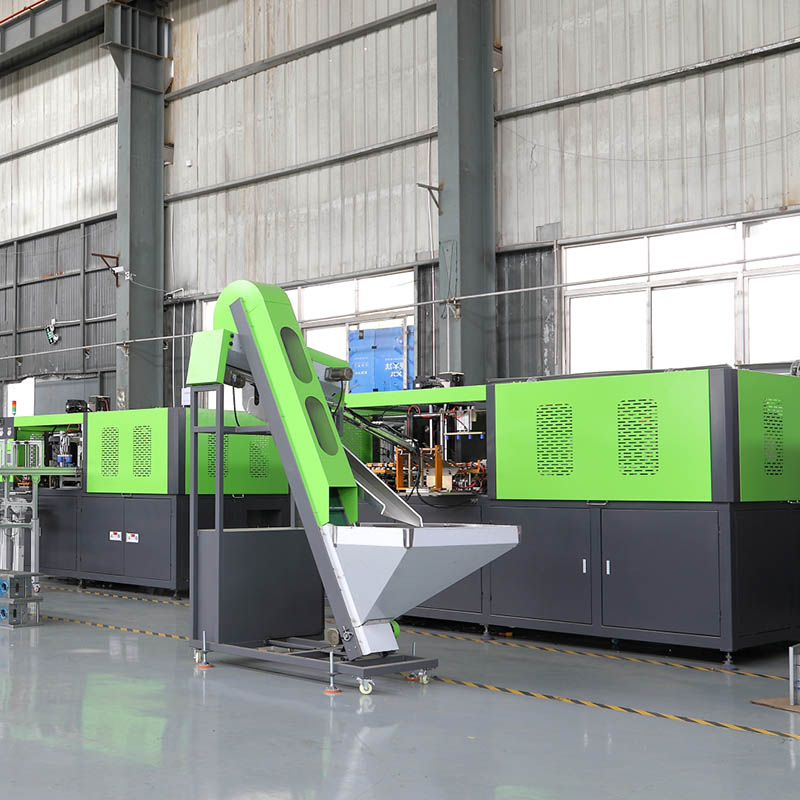
Troubleshooting Common PET Blow Molding Defects: TAIXIANG Engineers Explain Wall Thickness Variation
In PET bottle manufacturing, wall thickness variation is one of the most common and technically important blow molding defects. A bottle may look acceptable from the outside while having significant differences in wall thickness between the shoulder, body, base, and other critical areas. These variations can reduce mechanical strength, increase PET material consumption, create unstable production conditions, and cause problems during filling, transportation, and pressure testing.
At TAIXIANG MACHINE, we specialize in PET bottle blowing machines and complete PET bottle production solutions. Our engineers understand that consistent bottle quality depends on the interaction between the PET preform, heating system, stretching process, blowing pressure, mold design, machine timing, and production parameters. Therefore, solving wall thickness variation requires more than simply adjusting one machine parameter.
This technical guide explains the major causes of PET bottle wall thickness variation and provides a systematic troubleshooting method based on practical PET blow molding engineering principles.
What Is Wall Thickness Variation in PET Blow Molding?
Wall thickness variation occurs when different areas of a PET bottle have significantly different material thicknesses after the preform has been stretched and blown into the final bottle shape.
During the PET blow molding process, the preform is first heated to an appropriate processing temperature. It is then transferred into the blow mold, where a stretch rod elongates the preform vertically while compressed air expands the heated PET material against the mold cavity.
Ideally, the PET material should distribute evenly throughout the bottle. In actual production, however, the polymer does not always move uniformly. Differences in preform temperature, heating profile, stretch ratio, mold geometry, blowing timing, preform design, and machine settings can cause PET material to accumulate in some areas and become excessively thin in others.
Common symptoms include:
- Thin bottle shoulders
- Thin sidewall areas
- Excessive material accumulation near the base
- Uneven bottle base thickness
- Different thickness between opposite sides of the bottle
- Unstable bottle weight distribution
- Reduced top-load or burst strength
- Inconsistent bottle quality between production cycles
Why Is Wall Thickness Uniformity Important?
Wall thickness is directly related to PET bottle performance. A bottle that is unnecessarily thick in one area and excessively thin in another is not an optimized bottle.
For high-volume beverage production, even a small amount of unnecessary PET material can become a significant production cost over millions of bottles. At the same time, excessive thinning in a critical area can cause deformation, poor pressure resistance, leakage, bottle instability, or failure during transportation.
A well-designed PET blowing process should therefore achieve a balance between:
- Material distribution
- Bottle mechanical strength
- Bottle weight
- Production speed
- Energy consumption
- Preform design
- Machine stability
This is particularly important for lightweight PET bottles, where the process window becomes narrower and small changes in temperature or stretching conditions can have a noticeable effect on bottle quality.
1. Preform Temperature Distribution Is Not Uniform
One of the first areas TAIXIANG engineers recommend checking is the preform heating profile. PET is highly sensitive to processing temperature, and the temperature of the preform directly influences how the material stretches during blow molding.
If one section of the preform is too cold, it may resist stretching and remain relatively thick. If another section is too hot, the PET may stretch excessively and become too thin.
For example, if the shoulder area of the preform is overheated while the body remains relatively cool, the shoulder may stretch too aggressively during blowing. This can result in a thin shoulder and excessive material remaining in other parts of the bottle.
Typical Causes
- Incorrect heating-zone temperature settings
- Uneven infrared heating
- Incorrect preform rotation
- Incorrect distance between preforms and heating lamps
- Damaged or aging heating lamps
- Improper cooling after heating
- Insufficient temperature stabilization time
TAIXIANG Engineering Approach
Instead of increasing or reducing the overall oven temperature blindly, engineers should evaluate the temperature distribution along the entire preform.
The goal is not simply to make the preform "hotter." The objective is to establish a controlled thermal profile that allows the PET material to stretch and distribute consistently during the blowing process.
2. Incorrect Stretch Ratio Can Cause Uneven Material Distribution
PET bottle production combines axial stretching and radial stretching. The stretch rod controls the longitudinal movement of the preform, while compressed air expands the material outward.
If the axial stretch and radial stretch are not properly balanced, material distribution can become uneven.
A low or improperly controlled axial stretching process can leave excessive PET material in certain areas. Excessive stretching, on the other hand, can create thin sections where the material is stretched too aggressively.
Bottle design also has a major influence on stretch behavior. Tall bottles, wide bottles, lightweight bottles, and bottles with complex shoulders require different stretching characteristics.
Therefore, machine selection and process parameter design should be based on the actual bottle size, preform weight, neck finish, bottle geometry, and required production capacity.
3. Preform Design and Preform Weight Affect Final Bottle Thickness
A PET blowing machine cannot compensate indefinitely for an unsuitable preform. The preform is the starting material of the final bottle, and its geometry determines how PET will flow and stretch during blowing.
Important preform parameters include:
- Preform weight
- Preform length
- Body diameter
- Wall thickness distribution
- Neck finish
- Gate design
- Material quality
For example, a preform that is too heavy for a particular bottle design may produce excessive material accumulation. A preform that is too light may result in insufficient material in high-stress areas.
This is why PET bottle blowing solutions should be evaluated as a complete system rather than considering the blowing machine separately from the preform.
4. Blow Air Pressure and Blowing Timing Matter
High-pressure air is responsible for expanding the heated preform against the mold cavity. However, increasing air pressure does not automatically solve wall thickness problems.
The timing between preform stretching, pre-blowing, and high-pressure blowing is critical. If pre-blowing begins too early or too late, the PET may move toward different regions of the mold before the final blowing stage.
Potential Problems
- Premature pre-blowing can change PET material distribution.
- Delayed pre-blowing can cause insufficient expansion in certain areas.
- Insufficient air pressure can prevent the bottle from fully reaching the mold wall.
- Unstable air pressure can cause production-to-production variation.
- Incorrect exhaust timing can influence bottle formation.
A stable PET blowing machine should provide consistent pneumatic performance throughout production. This is why the air compressor, air storage tank, filters, dryer, valves, and air circuits should be correctly matched to the machine and production requirements.
5. Mold Design Can Create Localized Wall Thickness Problems
The blow mold determines the final geometry of the PET bottle. Sharp transitions, complex shoulders, narrow areas, deep bases, embossed logos, handles, and other design features can influence PET material movement.
If the mold geometry is not optimized for PET stretching, the material may become concentrated in one region while another region becomes excessively thin.
Mold cooling is also important. Uneven mold temperature can affect the cooling rate of the PET bottle and contribute to unstable bottle formation and dimensional variation.
At TAIXIANG MACHINE, we recommend evaluating the bottle design, preform design, and blowing process together rather than treating the mold as an isolated component.
6. Preform Positioning and Machine Mechanical Accuracy
Mechanical positioning accuracy is another factor that is sometimes overlooked during troubleshooting.
If the preform is not correctly positioned relative to the stretch rod and mold cavity, the stretching process may become asymmetric.
This can produce a bottle where one side is thicker than the opposite side.
Engineers should check:
- Preform neck positioning
- Stretch rod alignment
- Mold center alignment
- Preform transfer mechanism
- Clamping accuracy
- Mechanical wear
- Synchronization between machine stations
When the mechanical system is correctly aligned, process parameter adjustments become much more effective.
7. Common PET Bottle Wall Thickness Problems and Solutions
| Observed Problem | Possible Cause | Recommended Inspection |
|---|---|---|
| Thin shoulder | Shoulder temperature too high or excessive stretching | Check heating profile, preform design and stretch timing |
| Thick shoulder | Shoulder temperature too low or insufficient stretching | Check oven temperature and stretch ratio |
| Thin body section | Excessive radial stretching or uneven preform temperature | Check heating zones and pre-blowing timing |
| Thick body section | Insufficient stretching or low local temperature | Check preform temperature distribution |
| Uneven left/right thickness | Preform or stretch rod misalignment | Check mechanical alignment |
| Heavy bottle base | Material not distributed sufficiently toward the body | Check pre-blowing, stretching and heating profile |
| Thin base | Excessive stretching or excessive local heating | Check bottom heating and stretch timing |
| Unstable thickness between cycles | Temperature, pressure or mechanical instability | Check machine repeatability and auxiliary equipment |
8. A Systematic TAIXIANG Troubleshooting Method
When wall thickness variation occurs, changing multiple parameters at the same time can make the problem more difficult to solve. TAIXIANG engineers recommend a structured troubleshooting sequence.
Step 1: Check the Bottle and Preform
Confirm the preform weight, dimensions, neck finish, bottle design, and target bottle weight. Make sure the preform is appropriate for the bottle being produced.
Step 2: Check the Heating Profile
Check every heating zone instead of looking only at the total oven temperature. Inspect heating lamps, preform rotation, lamp distance, and cooling conditions.
Step 3: Check Stretching
Inspect stretch rod movement, stroke, speed, alignment, and timing. Confirm that the preform is being stretched consistently from cycle to cycle.
Step 4: Check Pre-Blowing
Verify pre-blowing pressure and timing. The objective is to establish controlled initial expansion before high-pressure blowing completes the bottle formation.
Step 5: Check High-Pressure Air
Confirm that the high-pressure air supply remains stable during continuous operation. Air compressor capacity, air tank volume, filters, dryers, valves, and piping can all affect pneumatic stability.
Step 6: Check Mold and Alignment
Inspect mold condition, cavity geometry, cooling performance, mold closing accuracy, and alignment with the preform.
Step 7: Measure the Finished Bottle
Do not rely only on visual inspection. Measure wall thickness at critical points such as the shoulder, upper body, middle body, lower body, and base. Comparing these measurements helps engineers identify the direction in which PET material is moving during the blowing process.
Why Changing the Oven Temperature Alone Often Does Not Solve the Problem
A common mistake in PET bottle production is to treat every wall thickness problem as a heating problem. While temperature is extremely important, it is only one part of the PET blowing process.
A wall thickness defect can originate from the interaction of several factors:
- Preform geometry
- Preform weight
- Heating profile
- Stretch rod movement
- Pre-blowing timing
- High-pressure blowing
- Mold design
- Mold cooling
- Mechanical alignment
- Air supply stability
Therefore, experienced PET blow molding engineers diagnose the complete process rather than continuously increasing or reducing oven temperature.
How PET Bottle Lightweighting Increases the Importance of Process Control
Lightweight PET bottles are increasingly used to reduce material consumption and production costs. However, lightweighting also reduces the margin for process variation.
When a bottle uses less PET resin, every gram of material becomes more important. A small material distribution error can create a critical thin area that would not have been a problem in a heavier bottle.
For this reason, lightweight PET bottle production requires precise control of heating, stretching, blowing, mold design, preform geometry, and machine repeatability.
The objective is not simply to produce a lighter bottle. The objective is to produce a lighter bottle while maintaining sufficient strength, stability, appearance, and performance.
TAIXIANG MACHINE: PET Blow Molding Solutions from Machine to Production
TAIXIANG MACHINE is a professional manufacturer specializing in PET blow molding machines and PET bottle production solutions. Our engineering approach focuses on matching the blowing machine with the actual production requirements of the customer.
Depending on the application, PET bottle production may involve different bottle sizes, cavity configurations, production capacities, automation levels, and auxiliary equipment requirements.
TAIXIANG can provide PET bottle blowing solutions for applications such as:
- Mineral water bottles
- Beverage bottles
- Carbonated soft drink bottles
- Edible oil bottles
- Juice bottles
- Cosmetic and personal-care PET bottles
- Large-volume PET containers
- 5-gallon PET bottles and water containers
Depending on the required production capacity, TAIXIANG can recommend semi-automatic or fully automatic PET blow molding configurations.
A complete solution may also include supporting equipment such as high-pressure air compressors, air storage tanks, air dryers, filters, chillers, and other auxiliary systems required for stable PET bottle production.
This complete-system approach is particularly important when customers are starting a new PET bottle production line. The goal is to ensure that the machine, mold, preform, compressed-air system, and production parameters work together as one stable manufacturing system.
Frequently Asked Questions About PET Bottle Wall Thickness Variation
What causes uneven wall thickness in PET bottles?
The most common causes include uneven preform heating, unsuitable preform design, incorrect stretch ratio, improper pre-blowing timing, unstable blowing pressure, mold geometry, mold cooling problems, and mechanical misalignment.
Can changing the PET blowing machine temperature fix wall thickness variation?
Temperature adjustment can solve some problems, but not all. Wall thickness should be diagnosed by evaluating the preform, heating profile, stretching, blowing pressure, mold design, and mechanical alignment as a complete process.
Why is one side of the PET bottle thinner than the other?
Asymmetric wall thickness may indicate incorrect preform positioning, stretch rod misalignment, mold alignment problems, uneven heating, or inconsistent material distribution during blowing.
Does preform weight affect PET bottle wall thickness?
Yes. Preform weight determines the total amount of PET available for the final bottle. However, weight alone is not enough. Preform geometry and material distribution also determine how PET stretches into the bottle.
Why is the bottle base too thick?
A heavy bottle base can be related to insufficient material movement toward the body, unsuitable preform design, incorrect heating distribution, or improper pre-blowing and stretching conditions.
How can I improve PET bottle wall thickness uniformity?
Start by measuring the thickness distribution of the finished bottle. Then evaluate preform design, heating profile, stretch ratio, pre-blowing timing, high-pressure air stability, mold geometry, cooling, and machine alignment systematically.
Conclusion: Stable PET Bottle Quality Starts with the Complete Blowing Process
Wall thickness variation is not simply a single-machine-setting problem. It is the result of how PET material responds to heating, axial stretching, radial stretching, air pressure, mold geometry, cooling, and machine mechanics.
For this reason, stable PET bottle production requires a complete engineering approach. The correct preform must be matched with the bottle design, heating system, stretching system, blowing system, mold, and auxiliary equipment.
TAIXIANG MACHINE focuses on PET blow molding technology and complete PET bottle production solutions. From machine selection and bottle application analysis to production parameter optimization, our engineering team helps customers build reliable and efficient PET bottle manufacturing systems.
If you are experiencing wall thickness variation, unstable bottle quality, excessive PET material consumption, or difficulty selecting the right PET blow molding machine, contact TAIXIANG MACHINE with your bottle size, bottle weight, preform weight, required production capacity, and bottle drawings or samples. Our engineers can analyze the application and recommend a suitable PET bottle blowing solution.
Keywords
PET blow molding machine, PET bottle blowing machine, PET blow molding defects, PET bottle wall thickness variation, PET bottle thickness problems, PET bottle manufacturing, PET bottle production machine, PET blowing machine manufacturer, PET blow molding troubleshooting, PET bottle quality control, PET preform heating, PET preform temperature, PET stretch ratio, PET bottle preform, PET bottle mold, PET blow molding process, PET bottle lightweighting, PET bottle production line, automatic PET blow molding machine, semi automatic PET blow molding machine, PET bottle blowing solution, PET blowing machine supplier, PET bottle machine manufacturer, PET bottle making machine, PET water bottle blowing machine, PET beverage bottle blowing machine, PET mineral water bottle machine, PET carbonated drink bottle machine, 5 gallon PET bottle machine, PET bottle production equipment, PET blowing machine China, PET blow molding machine manufacturer China, TAIXIANG MACHINE, PET bottle blowing solution expert