
read the article

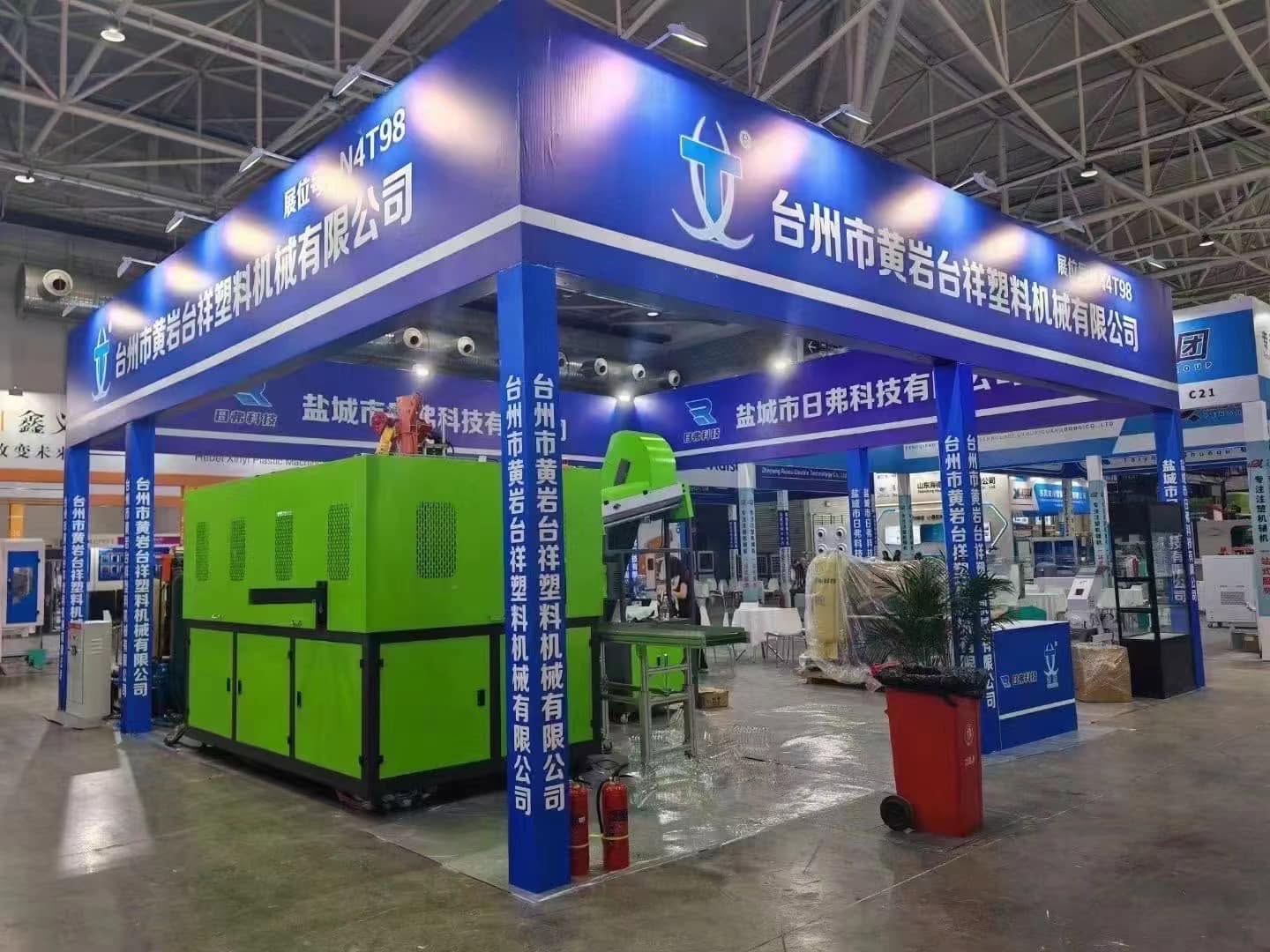
In the PET packaging industry, machine specifications often dominate purchasing decisions. Cavity counts, cycle times, and clamping forces are scrutinized meticulously. However, an invisible variable frequently undermines even the most precisely engineered blow molding line: the ambient workshop environment.
At TAIXIANG MACHINE, we have observed that clients operating identical equipment in different climates or seasons often report drastically different scrap rates and bottle quality inconsistencies. This is not a machine defect—it is a thermodynamic and chemical reality. This article dissects exactly how temperature and humidity interact with the PET stretch blow molding process and provides actionable engineering solutions from our application specialists.
1. The Physics and Chemistry Behind the Problem
1.1 PET’s Hygroscopic Nature and Hydrolysis
PET (Polyethylene Terephthalate) is inherently hygroscopic. When exposed to ambient air, preforms and resin pellets absorb moisture. During the reheating phase in the blow molding machine’s oven, if that moisture is not properly controlled, it vaporizes and triggers hydrolysis—a chemical reaction that breaks the polymer chains, reducing Intrinsic Viscosity (IV) [citation:1][citation:14].
The consequences are visible on the production floor:
- Surface defects: Siver streaks, bubbles, and hazy patches on the bottle wall.
- Mechanical failure: Reduced stress-crack resistance and lower burst pressure.
- Process instability: Erratic wall thickness distribution due to altered resin flow characteristics.
1.2 The Glass Transition Window
PET’s glass transition temperature (Tg) is approximately 75°C–80°C [citation:1]. The preform must be heated into a narrow window above Tg to allow molecular chain mobility for stretching and blowing. Ambient temperature fluctuations directly alter the baseline thermal profile of the preform before it even enters the IR lamps.
Research from the Federal University of Viçosa (Brazil) documented a real-world case where sudden weather changes—specifically the onset of rain—caused consecutive defective production batches. The technicians struggled because temperature and humidity shifted simultaneously, making intuitive adjustment impossible [citation:1].
2. Quantifying the Impact: Temperature vs. Humidity
| Environmental Factor | Mechanism of Impact | Typical Symptom in Production | TAIXIANG Recommended Range |
|---|---|---|---|
| High Ambient Temp (>30°C) | Preform absorbs heat before oven; IR lamps overheat the surface; internal stress imbalance. | Bottle deformation, uneven wall thickness, whitening at stretch rod contact point. | 22°C–28°C [citation:15] |
| Low Ambient Temp (<15°C) | Preform requires excessive IR energy; surface crystallizes before core reaches Tg. | Pearlescence (blushing), unmelted cold spots, high blow pressure requirement. | 22°C–28°C |
| High Humidity (>65% RH) | Preform surface condensation absorbs into PET; hydrolysis during heating. | Bubbles, silver streaks, reduced IV, bottle cracking after filling. | ≤50% RH in molding area [citation:3] |
| Low Humidity (<30% RH) | Static electricity attracts dust to preforms; plasticization shifts slightly. | Black spots, dust contamination, minor viscosity drift. | 40%–60% RH [citation:15] |
Critical Insight from TAIXIANG Engineering: A common misconception is that only raw material drying matters. In reality, preforms stored in an open silo or fed through an uncontrolled conveyor re-absorb ambient moisture within minutes. Japanese patent literature explicitly specifies that the molding room relative humidity must be maintained at 50% or below year-round to stabilize bottle wall thickness [citation:3].
3. The TAIXIANG Solution: Engineering for Environmental Resilience
As a manufacturer specializing in both semi-automatic and fully automatic PET blow molding systems, TAIXIANG MACHINE designs equipment with environmental compensation in mind. Our approach addresses the problem at three levels.
3.1 Preform Conditioning and Storage
For our automatic machines (TX series with 2–9 cavities), we recommend integrating a temperature-conditioned preform hopper. This ensures preforms enter the heating tunnel at a consistent baseline temperature regardless of summer heat or winter chills. Research indicates that preforms stored at 38°C require approximately 10 minutes in a 28°C conditioning zone to stabilize before blowing [citation:3].
3.2 Zoned IR Heating with Adaptive Control
TAIXIANG’s automatic PET blowing machines utilize multi-zone infrared heating with independently adjustable lamp power [citation:8]. When ambient humidity is high, operators can slightly increase the pre-heat zone power to drive off surface moisture before the preform reaches critical blowing temperature. Our PLC touchscreen interface allows recipe saving for “Humid Season” and “Dry Season” profiles.
3.3 Compressed Air Quality
High-pressure air used for blowing must be dried to a dew point of at least -40°C [citation:14]. Moisture in the blow air itself can cause internal condensation and bacterial growth in beverage bottles. TAIXIANG’s valve blocks and air circuits are designed for compatibility with high-efficiency refrigerated dryers and desiccant systems.
4. Practical Guidelines for Plant Managers
Based on field data from TAIXIANG installations across Southeast Asia, the Middle East, and South America, we recommend the following operational protocols:
- Monitor, Don’t Guess: Install a calibrated thermo-hygrometer near the preform loading area. Log data hourly during seasonal transitions.
- Seal the Preform Path: Minimize the distance between the preform storage and the machine hopper. Enclose conveyors where feasible.
- Adjust Drying, Not Just Heating: If humidity spikes, increase resin drying time or lower the dew point of the drying air. Simply raising oven temperatures will cause surface crystallization without solving the moisture problem.
- Use the Correct Chiller: For semi-automatic machines, ensure the mold chiller is sized for the ambient conditions. High humidity reduces chiller efficiency, leading to longer cycle times.
Need a Blow Molding Solution That Handles Your Climate?
TAIXIANG MACHINE doesn’t just sell equipment—we deliver climate-adapted PET blowing solutions. Whether you are in a tropical zone with year-round 80% humidity or a dry desert climate with 40°C summers, our engineering team can specify the right machine configuration, drying system, and HVAC integration for your factory.
📩 Contact our application engineers with your local climate data and bottle specifications. We will provide a tailored proposal within 24 hours.