read the article

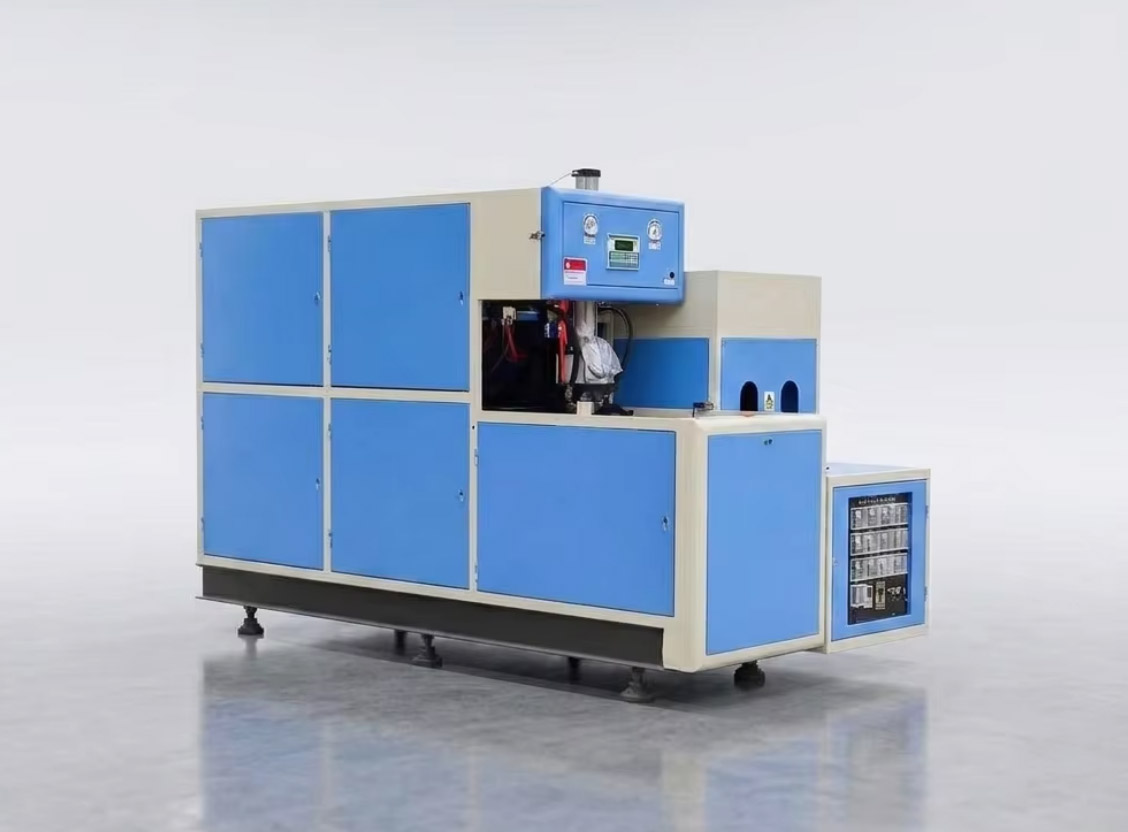
Direct Answer: The next generation of PET blow molding systems is defined by three converging forces: intelligent process control that autonomously adapts to material variability, energy architectures that cut compressed air consumption by up to 30%, and modular flexibility that allows a single machine to serve multiple bottle formats without sacrificing output stability. TAIXIANG MACHINE addresses all three through its automatic and semi-automatic PET blowing platforms.
What Defines a “Next-Gen” PET Blow Molding System?
A next-generation PET blow molding system is a stretch blow molding machine that integrates real-time process monitoring, adaptive parameter control, and energy-recovery mechanisms to maintain consistent bottle quality across variable operating conditions. Unlike conventional systems that require manual recalibration when ambient temperature, preform weight, or recycled PET content changes, intelligent systems compensate automatically[citation:8].
The competitive pressure driving this evolution is straightforward: producers must run more formats, faster, with lighter preforms and higher rPET percentages—while reducing scrap and energy costs[citation:2]. Traditional mechanical architectures were not designed for this level of variability.
Intelligent Process Control: From Manual Adjustment to Autonomous Operation
The most significant leap in blow molding technology is the shift from operator-dependent process management to AI-driven self-regulation. Systems like Krones’ Contiloop AI measure container transmittance at up to 32 positions in the exit star wheel and automatically adjust stretching parameters when deviations are detected[citation:8]. This matters particularly for rPET production, where the process window is narrow and manual intervention frequently introduces defects.
TAIXIANG’s fully automatic platforms incorporate PLC-based real-time monitoring through a touchscreen HMI, giving operators visibility into heating, blowing, and timing parameters without requiring the deep process expertise that older systems demanded[citation:4]. For manufacturers transitioning from semi-automatic operations to higher-output production, this represents a critical bridge between capital investment and operational capability.
Why This Matters for Small-to-Medium Producers
Not every factory needs 100,000 BPH output. For small and medium enterprises, the barriers to entry are often operational complexity and energy cost, not theoretical speed. TAIXIANG’s semi-automatic line, covering 1 to 4 cavities with outputs from 300 to 2,500 BPH, is designed for payback within 3–6 months—a timeframe that hinges on stable, low-maintenance operation rather than peak throughput[citation:1].
Energy Efficiency: The Hidden Cost Driver in PET Blowing
Compressed air is the single largest energy expense in stretch blow molding. High-pressure air generation accounts for a disproportionate share of operational costs, and the industry has responded with recycling systems that recover intermediate-pressure air from the blowing station.
Krones’ Air Wizard Triple system delivers up to 30% less blowing air consumption compared to previous valve technology through intermediate pressure stages and automatic self-optimization[citation:5]. This is not a marginal improvement—it directly reduces the per-bottle utility cost that determines whether a production line is profitable at competitive pricing.
TAIXIANG addresses energy efficiency at both ends of the machine portfolio. The automatic series features advanced IR heating that cuts power consumption by approximately 30% through multi-zone infrared heating with adjustable lamps[citation:4]. The semi-automatic series achieves 25% lower power draw through simpler mechanics and optimized heating cycles[citation:1].
Energy Comparison at a Glance
| Machine Category | Typical Output | Energy Strategy | TAIXIANG Model Reference |
|---|---|---|---|
| Semi-Automatic | 300–2,500 BPH | 25% power reduction via optimized heating | 3L, 5L, 10L series |
| Fully Automatic (Entry) | 1,500–2,500 BPH | 30% power savings, precision temperature control | TX-106-2 / TX-114.3-2 |
| Fully Automatic (High Output) | 4,000–12,000 BPH | Servo-driven, multi-zone IR, compressed air optimization | TX-138-4 / TX-114.3-9 |
Flexibility: The New Production Imperative
Format flexibility has become a core requirement rather than a premium feature. Producers serving beverage, dairy, cooking oil, and household chemical markets increasingly need to switch between container sizes and shapes without extended downtime[citation:2].
Traditional blow molding architectures rely on fixed-step mechanical transfer systems that constrain changeover speed. Newer designs replace these with independently controlled shuttles or servo-driven stretch rods, allowing each preform to follow a customized path and cycle time[citation:2][citation:20].
For TAIXIANG’s customer base—which spans small-scale water bottlers to mid-tier edible oil producers—flexibility is often expressed in simpler terms: can the machine handle a 5-gallon container on Monday and a 1.5L bottle on Wednesday without mechanical overhaul? The company’s multi-cavity configurations and quick mold change design address this directly[citation:1][citation:4].
TAIXIANG’s Positioning in the Next-Gen Landscape
TAIXIANG MACHINE operates at the intersection of capability and accessibility. The company’s product architecture reflects a deliberate understanding of its market: manufacturers who need reliable PET blowing capability without the operational overhead of ultra-high-speed rotary systems.
Semi-Automatic: The Gateway to PET Production
The semi-automatic line serves producers transitioning from manual or purchased-bottle operations. Key specifications include[citation:1]:
- 1–4 cavities, 1L to 5-gallon capacity
- Output range: 300–2,500 BPH depending on configuration
- Single-button operation learnable within one day
- ISO 9001 and CE compliance
Fully Automatic: Scale with Control
The automatic series targets producers who have validated their market and need higher throughput with consistent quality[citation:4]:
- 2–9 cavities, up to 12,000 BPH
- 3-year main parts warranty
- Heavy-duty clamping and precision IR heating
- Deployed in 80+ countries
Frequently Asked Questions
What is the difference between semi-automatic and fully automatic PET blow molding machines?
Semi-automatic machines require manual loading of preforms and removal of finished bottles, with the operator initiating each cycle. Fully automatic machines handle preform feeding, heating, blowing, and bottle ejection without manual intervention, enabling continuous higher-speed production[citation:1][citation:4].
How does intelligent process control improve bottle quality?
Intelligent systems measure container parameters in real time and automatically adjust stretching and blowing variables when ambient conditions, preform properties, or rPET content change. This eliminates the manual recalibration that conventional machines require, reducing operator error and scrap rates[citation:8].
What energy savings can a modern PET blow molding machine achieve?
Current-generation systems achieve 25–30% reduction in energy consumption through advanced IR heating and compressed air recycling. Krones’ Air Wizard Triple recovers intermediate-pressure air, cutting blowing air consumption by up to 30%[citation:5]. TAIXIANG’s automatic series delivers approximately 30% power savings compared to older heating architectures[citation:4].
Can one machine produce both small water bottles and large containers?
Yes, with appropriate mold configurations and machine specifications. TAIXIANG’s semi-automatic line covers 3L to 5-gallon applications, while the automatic series handles 2L to 3L volumes with higher output. Quick mold change systems reduce changeover time to minutes[citation:1][citation:4].
What should a producer consider when choosing between semi-automatic and automatic systems?
The primary factors are target output, labor availability, and capital budget. Semi-automatic systems offer lower initial investment and faster ROI for small-to-medium production. Automatic systems become economical when continuous operation and labor reduction outweigh the higher upfront cost[citation:1][citation:4].