
read the article

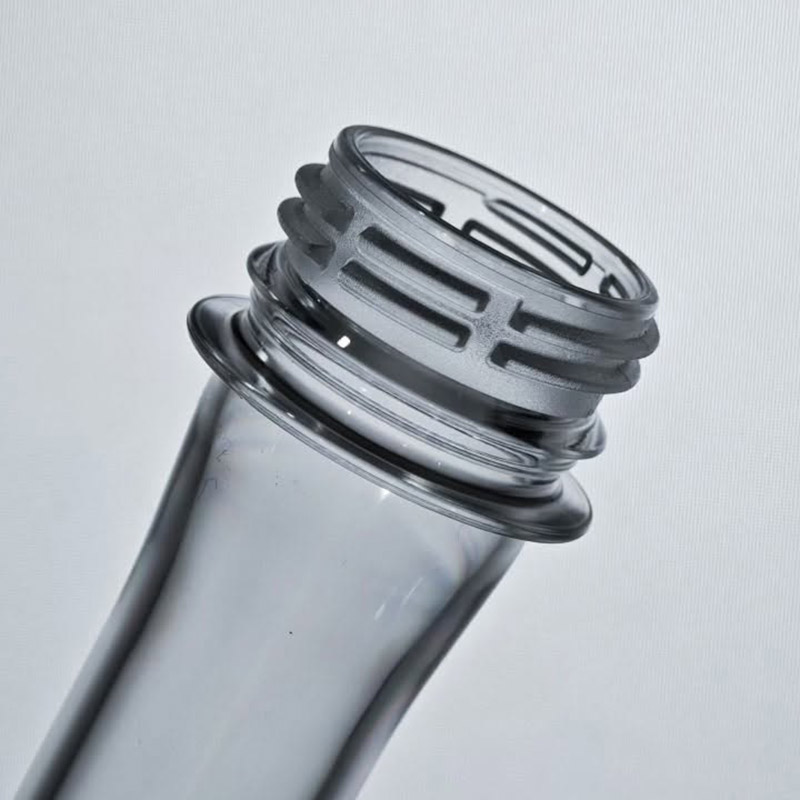
How to Reduce Scrap Rate in PET Bottle Production
In high-speed PET bottle manufacturing, high scrap rates directly erode profit margins and disrupt production flow. Achieving zero-defect packaging requires a comprehensive approach encompassing thermal optimization, precision pneumatics, preform quality control, and advanced machinery engineering. As a leading PET blow molding machine manufacturer and solution expert, TAIXIANG MACHINE explores the engineering strategies required to drastically lower scrap rates and maximize efficiency.
1. The Root Causes of PET Bottle Defects
Before implementing corrective measures, manufacturers must identify the primary failure modes in stretch blow molding (SBM). Common defects include:
- Wall Thickness Asymmetry (Off-center distribution): Caused by improper preform temperature or delayed stretch rod action.
- Bottom Thinning / Blowout: Triggered by excessive pre-blow pressure or incorrect pre-blow timing.
- Whitening / Crystallization: Resulting from overheating the preform body or inadequate cooling.
- Seam Line Cracking: Caused by worn mold parting lines or excessive clamping force mismatch.
2. Optimizing Thermal Profiles in the Heating Zone
The heating phase is the most critical determinant of bottle quality. If the preform temperature profile deviates even slightly, wall distribution fails.
- Zone-by-Zone Lamp Calibration: Modern rotary and linear blow molding machines from TAIXIANG feature independent infrared lamp zone controls. Adjusting individual lamp intensities prevents localized overheating.
- Preform Rotation Consistency: Ensure smooth preform rotation during heating. If a preform skips or stutters on the spindle, uneven sidewall heating occurs, leading to localized thinning and high scrap rates.
- Environmental Thermal Stability: Maintain a stable ambient temperature in the production workshop to prevent draft-induced cooling fluctuations.
3. Precision Pneumatics: Mastering Pre-Blow and High-Pressure Blowing
Pneumatic timing dictates how the preform expands into the mold cavity. Fine-tuning pressure parameters resolves major structural flaws:
- Optimizing Pre-Blow Timing and Pressure: Introducing pre-blow too early causes bottom thinning; introducing it too late causes premature stretching and tearing near the neck. Calibrating the exact millisecond of pre-blow air injection ensures uniform radial expansion.
- High-Pressure Air Purity: Moisture or oil contamination in high-pressure lines can cause micro-defects and surface blemishes. Utilizing advanced multi-stage filtration systems protects structural integrity.
4. Mold Design and Cooling Efficiency
The interaction between the hot PET material and the mold surface determines dimensional stability and clarity.
- Advanced Chiller Integration: Maintaining consistent mold temperature through high-efficiency industrial chillers prevents thermal stress and post-mold deformation.
- Venting Optimization: Trapped air between the expanding preform and the mold wall creates surface dimples. Optimizing micro-venting channels in aluminum or steel blow molds eliminates air pockets instantly.
5. The TAIXIANG MACHINE Advantage: Engineered for Reliability
Eliminating scrap goes beyond manual adjustments—it requires robust machine architecture. At TAIXIANG MACHINE, our automatic PET blow molding machines are engineered with:
- Closed-loop servo-driven stretch rod systems for ultra-precise axial positioning.
- Intelligent PLC control interfaces equipped with real-time fault diagnosis and parameter memory.
- Energy-efficient heating tunnels designed to lock in thermal energy and reduce variance across high-speed runs.
Conclusion
Reducing scrap rates in PET bottle production is a continuous engineering discipline combining thermal precision, pneumatic accuracy, and robust machine capability. By partnering with an experienced manufacturer like TAIXIANG MACHINE, packaging enterprises can achieve superior bottle clarity, consistent wall distribution, and maximized production uptime.