
read the article

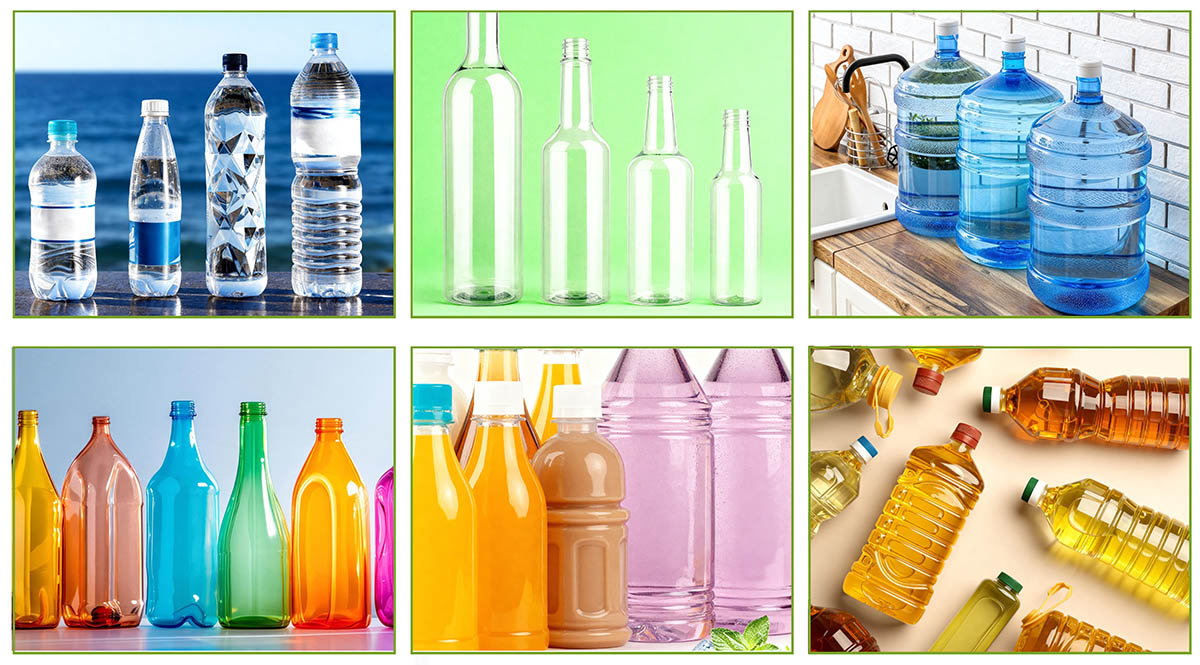
How to Prevent PET Bottle Stress Cracking in Carbonated Soft Drink (CSD) Production Lines
A Deep Technical Guide by TAIXIANG MACHINE — Your PET Blow Molding Solution Expert
PET stress cracking CSD bottle production technical guide
Environmental stress cracking (ESC) in PET bottles remains one of the most costly and persistent challenges in carbonated soft drink (CSD) production[reference:0]. Since the introduction of one-piece PET bottles with molded-in feet in 1978, stress cracking in the petaloid-shaped base has plagued the beverage industry[reference:1][reference:2]. A large crack forms in the amorphous base portion of the bottle, causing complete loss of contents[reference:3]. For CSD producers, this means product loss, supply chain disruptions, and brand reputation damage.
As a professional PET blow molding machine manufacturer with over 15 years of experience serving 80+ countries, TAIXIANG MACHINE has helped countless customers overcome stress cracking challenges through optimized equipment design, precise process control, and comprehensive production solutions. This article provides a deep technical analysis of stress cracking mechanisms and a practical prevention framework for CSD production lines.
1. Understanding the Mechanism: Why Do CSD PET Bottles Crack?
Stress cracking in PET CSD bottles is a delayed failure phenomenon driven by alkaline hydrolytic cleavage of ester bonds in the PET polymer backbone[reference:4]. Microscopic analysis of fracture surfaces reveals that cracks initiate on the outside bottle wall and progress inward[reference:5]. This is critical to understand: the chemical environment outside the bottle is the primary culprit, not the carbonated contents inside[reference:6].
Several factors contribute to stress cracking susceptibility:
- Uneven crystallite distribution in the bottle base creates stress concentration points that reduce cracking resistance[reference:7].
- Insufficient stretch during the blow molding process leaves the base material inadequately oriented and more vulnerable[reference:8].
- Coarse petaloid base design with high maximum principal stress concentrations accelerates crack formation[reference:9].
- PET resin properties — resins with low molecular weight distribution and high viscosity are harder to orient during processing, leaving residual stress[reference:10]. High molecular weight resins that are difficult to melt can become crystallization nucleation sites, also reducing cracking resistance[reference:11].
- Physical aging greatly increases amorphous PET's susceptibility to hydrolytic stress crack failure[reference:12].
💡 Key Insight: Stress cracking is not a random defect — it is a predictable failure mode driven by the combination of tensile stress, alkaline environment, and susceptible amorphous PET morphology. Prevention requires addressing all three elements systematically.
2. Material Selection: The Foundation of Stress Crack Resistance
2.1 Intrinsic Viscosity (IV) Requirements
For CSD applications, higher molecular weight PET — measured by intrinsic viscosity (IV) — is essential due to environmental stress cracking[reference:13]. Higher IV means fewer chain ends and greater chain entanglement, which reduces interaction with chemical attacking agents[reference:14].
Industry standards recommend:
- Minimum IV of 0.80 dL/g for CSD containers[reference:15]
- Preferred IV of 0.82 dL/g or higher[reference:16]
- Current trend: IV of approximately 0.84 dL/g[reference:17]
TAIXIANG MACHINE recommends working with PET resin suppliers that offer CSD-grade resins with verified stress crack resistance, such as those with bi-orientation properties that provide optimal barrier and mechanical characteristics[reference:18].
2.2 Copolymer Modification
Controlling crystallization speed through copolymer modification is another effective strategy[reference:19]. Increasing diethylene glycol (DEG) and isophthalic acid (IPA) content reduces crystallization rate, which can improve stress crack resistance[reference:20]. However, careful balance is required as these modifications affect other properties like gas barrier and clarity.
3. Base Design Optimization: Engineering Out Stress Concentrations
The petaloid base geometry is the most critical design factor in stress cracking prevention[reference:21]. Research has demonstrated that optimized base design can increase stress crack resistance time by approximately 90% under standard conditions and up to 170% under optimized process conditions[reference:22][reference:23].
3.1 Finite Element Analysis (FEA) in Base Design
Modern base design relies on Finite Element Analysis (FEA) to identify and eliminate stress concentration points[reference:24][reference:25]. The petaloid shape must be redesigned to minimize maximum principal stress in the base region[reference:26]. Key design considerations include:
- Base foot geometry — optimizing the number, shape, and distribution of feet
- Base clearance — ensuring adequate height for stability[reference:27]
- Material distribution — achieving uniform stretching through advanced base profile design[reference:28]
- Gate centering — precise injection gate positioning on the bottle base[reference:29]
3.2 Advanced Base Designs in the Market
Industry leaders have demonstrated significant improvements through innovative base designs. For example, optimized CSD bases have shown 30% longer stress crack resistance for 0.5L bottles, 50% longer for 1.5L bottles, and 60% longer for 2.0L bottles under ISBT test protocols[reference:30][reference:31]. These designs also enable base weight reductions of 17–20% while improving performance[reference:32].
TAIXIANG MACHINE's engineering team applies FEA-based design principles to every CSD bottle project, ensuring that our blow molding machines produce bottles with optimized base geometry for maximum stress crack resistance.
4. Process Optimization: Getting the Blow Molding Parameters Right
Even with the best material and base design, improper processing parameters can ruin stress crack resistance. Research shows that optimized process conditions can double or triple stress crack resistance[reference:33].
4.1 Preform Re-Heating Temperature
Preform re-heating temperature is one of the most critical parameters. Studies have identified that setting the re-heating temperature to 105°C significantly improves stress crack resistance[reference:34][reference:35]. At this temperature, PET achieves optimal orientation during stretching, creating a more uniform and stress-resistant molecular structure in the base region.
4.2 Stretch Ratio and Strain Hardening
The stretch ratio at the bottle bottom during blow molding must exceed the strain hardening point of PET to produce enhanced mechanical strength[reference:36]. Insufficient stretching leaves the base amorphous and unoriented, making it particularly susceptible to failure[reference:37].
TAIXIANG's fully automatic PET blow molding machines feature precision servo-controlled stretching systems that ensure consistent, repeatable stretch ratios across every bottle produced.
4.3 Blow Pressure and Timing
Typical CSD bottle blow molding parameters include:
- Pre-blow pressure: 0.5–0.9 MPa[reference:38]
- Hold pressure: approximately 0.09 MPa for 0.5 seconds, then ramped to 1.5 MPa over 2 seconds[reference:39]
- Stretch rod speed: approximately 0.75 m/s[reference:40]
TAIXIANG's machines provide precise digital control over all these parameters, enabling producers to fine-tune their process for optimal stress crack resistance.
4.4 Base Cooling
Efficient base cooling is essential for dimensional stability and stress reduction. Advanced systems use dual external and internal cooling — mold base cooling circuits focus on warmer base zones externally, while hollow stretch rods provide internal cooling without requiring additional air supply[reference:41].
5. Environmental Controls: Managing the Chemical Environment
Since stress cracks initiate from the outside surface of the bottle, controlling the external chemical environment is paramount[reference:42].
5.1 Water Hardness and Alkalinity
Contrary to industry belief, water hardness is highly relevant to stress cracking[reference:43]. Hardness ions (calcium and magnesium) exert a tremendous positive impact by deactivating water alkalinity through precipitation as harmless carbonate minerals[reference:44].
The key concept is "excess alkalinity" — alkalinity that is not precipitated during solution evaporation[reference:45]. Limiting excess alkalinity by using water with sufficient hardness is an effective means of stress crack prevention[reference:46][reference:47].
Eliminating contact of filled PET bottles with softened water has proven to be a highly effective prevention strategy[reference:48][reference:49].
5.2 Conveyor Lubricants
Studies have shown that typical conveyor lubricant compositions act as "spectators" in stress cracking — they neither cause failure if water doesn't cause it, nor prevent failure if water otherwise causes it[reference:50]. The primary focus should remain on water quality management.
5.3 Physical Aging Prevention
Physical aging greatly increases amorphous PET's susceptibility to hydrolytic stress crack failure[reference:51]. Minimizing exposure of empty bottles to environmental conditions that promote physical aging provides another important prevention strategy[reference:52]. This includes:
- Controlling storage temperature and humidity
- Minimizing storage time before filling
- Protecting bottles from direct sunlight and UV exposure
6. Quality Assurance: The ISBT Stress Crack Test
The International Society of Beverage Technologists (ISBT) Accelerated Stress Crack Test Method is the industry standard for predicting bottle failure rates[reference:53]. In this test, bottles are exposed to sodium hydroxide solution, and the exposure time required to cause failure is recorded[reference:54].
Key ISBT test benchmarks for CSD bottles:
- 24-hour creeping test under 45°C conditions — superior to the standard 38°C requirement[reference:55][reference:56]
- Stress crack resistance times that exceed industry minimums by significant margins
TAIXIANG MACHINE supports customers in validating their bottle quality through ISBT-compliant testing protocols, ensuring that every bottle produced meets the highest standards of stress crack resistance.
7. The Role of Blow Molding Equipment in Stress Crack Prevention
The blow molding machine itself plays a crucial role in stress crack prevention through:
7.1 Precise Temperature Control
TAIXIANG's machines feature multi-zone infrared heating systems with digital temperature control, ensuring uniform heating across the preform wall. Uneven heating leads to inconsistent stretching and residual stress — both contributors to stress cracking.
7.2 Consistent Stretch Rod Performance
Advanced stretch rod end design improves preform end-cap material stretching and ensures accurate injection gate centering[reference:57]. TAIXIANG's servo-driven stretch rod systems provide repeatable, precise stretching cycle after cycle.
7.3 Efficient Base Cooling
TAIXIANG machines incorporate optimized base cooling circuits that focus on warmer base zones, ensuring consistent shape formation and minimizing residual stress[reference:58].
7.4 Wide Processing Window
With the increasing use of recycled PET (rPET), processing windows have become narrower[reference:59]. rPET variability — affected by seasonality, collection models, and recycling processes[reference:60] — requires blow molding equipment with broader parameter adjustment ranges. TAIXIANG machines are designed with wide processing windows to accommodate rPET and other challenging materials[reference:61].
🎯 TAIXIANG's Commitment: We don't just sell blow molding machines — we provide complete, optimized, turn-key production solutions for CSD bottle manufacturing[reference:62]. From material recommendations and base design consultation to machine configuration and process optimization, our team of experts ensures that your CSD bottles achieve maximum stress crack resistance and production efficiency.
8. Practical Prevention Checklist for CSD Producers
Based on the technical analysis above, here is a practical checklist for preventing stress cracking in CSD production:
| Category | Action Item | Priority |
|---|---|---|
| Material | Use PET resin with IV ≥ 0.82 dL/g for CSD applications | Critical |
| Material | Consider copolymer-modified PET for controlled crystallization | High |
| Design | Apply FEA-based petaloid base optimization | Critical |
| Design | Ensure adequate base clearance and foot geometry | High |
| Process | Set preform re-heating temperature to ~105°C | Critical |
| Process | Maintain stretch ratio above PET strain hardening point | Critical |
| Process | Optimize pre-blow and high-pressure blow parameters | High |
| Process | Implement dual external/internal base cooling | High |
| Environment | Use water with sufficient hardness; avoid softened water | Critical |
| Environment | Limit excess alkalinity in process water | Critical |
| Environment | Minimize empty bottle storage time and aging conditions | High |
| QA | Conduct regular ISBT stress crack testing | Critical |
9. Conclusion: A Systematic Approach to Stress Crack Prevention
Preventing PET bottle stress cracking in CSD production lines requires a systematic, multi-disciplinary approach that addresses:
- Material science — selecting the right PET resin with appropriate IV and copolymer characteristics
- Engineering design — optimizing petaloid base geometry through FEA to minimize stress concentrations
- Process control — precisely managing re-heating temperature, stretch ratios, blow pressures, and cooling
- Environmental management — controlling water chemistry, particularly hardness and alkalinity
- Quality assurance — validating performance through ISBT and other industry-standard testing
TAIXIANG MACHINE brings together all five elements in our comprehensive CSD bottle production solutions. With 15 years of manufacturing expertise, a global service network across 80+ countries, and a commitment to continuous innovation, we are your trusted partner in producing stress crack-resistant CSD PET bottles.
📞 Contact TAIXIANG MACHINE today to discuss your CSD bottle production requirements and learn how our blow molding solutions can help you achieve superior stress crack resistance and production efficiency.
🔑 Keywords
PET bottle stress cracking, CSD bottle stress cracking, environmental stress cracking, PET blow molding machine, stress crack prevention, PET bottle base design, ISBT stress crack test, PET resin IV, carbonated soft drink bottle, stretch blow molding, TAIXIANG MACHINE, PET bottle manufacturing, CSD production line, petaloid base optimization, PET stress crack resistance, blow molding process parameters, PET preform re-heating, rPET stress cracking, alkaline hydrolysis PET, PET bottle quality assurance