
read the article

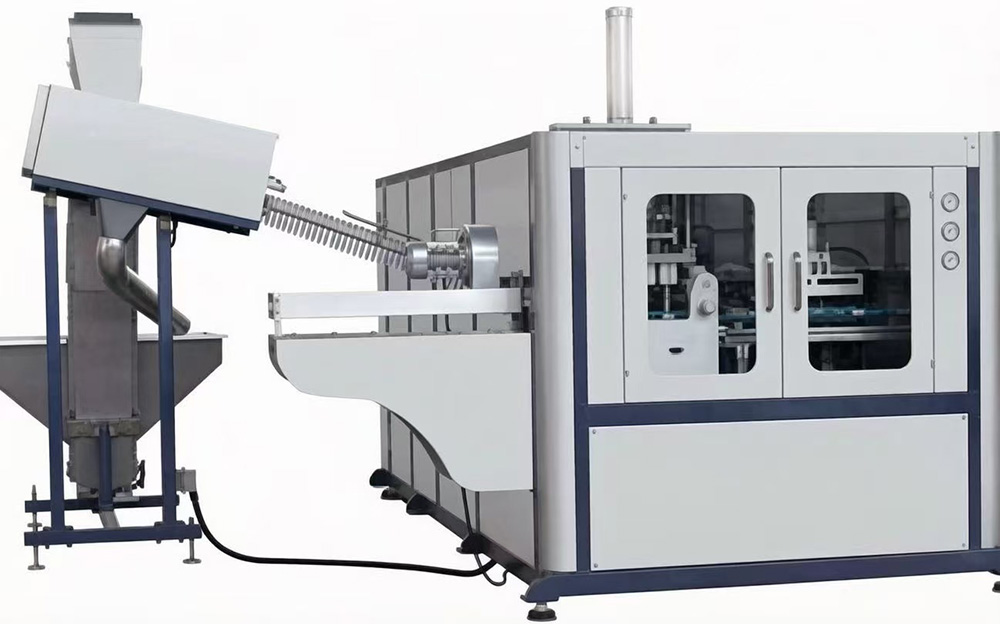
In the competitive world of PET bottle manufacturing, profitability hinges on efficiency. As a specialized manufacturer of PET stretch blow molding machines, we at tztaixiang understand that selecting the right equipment involves a complex interplay of variables. Among the most critical are the number of cavities and the machine's cycle time. These two factors are the primary determinants of your production output and, ultimately, your Return on Investment (ROI).
Whether you are a startup looking for a flexible solution or a high-volume producer aiming to maximize throughput, understanding the relationship between cavities and cycle time is essential. This article delves into the technical and economic implications of choosing machines ranging from compact linear models to high-speed rotary systems.
The Core Equation: Calculating Production Output
Before diving into the specifics of cavity counts, it is crucial to establish the basic formula for calculating theoretical production output:
Output (Bottles per Hour - BPH) = (3,600 seconds / Cycle Time in seconds) × Number of Cavities
This simple equation highlights that output is directly proportional to the number of cavities and inversely proportional to the cycle time. However, achieving the optimal balance is where engineering expertise comes into play.
1. The Entry Point: 2-Cavity and 4-Cavity Machines
Typically configured as linear blow molding machines, 2-cavity and 4-cavity systems are the backbone of small to medium-sized enterprises (SMEs), specialized production lines, and markets requiring frequent changeovers.
- Flexibility: These machines excel in flexibility. With smaller molds, changeover times between different bottle designs are significantly faster compared to larger rotary systems.
- Lower Capital Expenditure (CAPEX): The initial investment for a 2- or 4-cavity machine is substantially lower, making it accessible for businesses with limited capital or those testing a new product market.
- Operational Simplicity: Linear machines often feature simpler designs, requiring less specialized maintenance personnel and lower energy consumption per bottle produced compared to older or oversized rotary machines.
Output & ROI Impact: While the hourly output is lower (e.g., a 4-cavity machine running at a 4-second cycle time yields 3,600 BPH), the ROI can be very attractive if the market demand matches this volume. The risk is lower, and the breakeven point can be reached quickly in the right market segment.
2. The Mid-Range: 6-Cavity and 8-Cavity Machines
As production demands increase, manufacturers often look to 6-cavity or 8-cavity configurations. These can be high-end linear machines or entry-level rotary blow molding machines.
- Increased Efficiency: At this level, manufacturers begin to benefit from economies of scale. The output jumps significantly (e.g., an 8-cavity machine at a 3.5-second cycle time produces over 8,000 BPH).
- Automation and Integration: Machines with 6 or 8 cavities often come with higher levels of automation, including integrated preform feeding and bottle take-out systems, reducing labor costs.
Output & ROI Impact: The ROI calculation here shifts. The CAPEX is higher than a 4-cavity system, but the cost per bottle (unit production cost) decreases due to the higher output. This configuration strikes a balance between flexibility and mass production, making it ideal for established beverage companies or contract fillers.
3. The High-Volume Standard: 9-Cavity Machines
It may seem unusual to jump from 8 to 9 cavities, but in the realm of rotary blow molding machines, the 9-cavity configuration is a highly optimized solution for specific bottle sizes (typically up to 500ml or 1.5L, depending on the machine pitch).
-
* Optimized Footprint and Output: A 9-cavity rotary machine offers a sweet spot in terms of machine pitch (the distance between cavities on the rotary wheel). It maximizes the number of cavities within a compact machine size, delivering exceptionally high output per square meter of factory floor space.
* Superior Engineering: Achieving a fast cycle time with 9 cavities requires advanced technology in preform heating, stretching, and mold clamping. tztaixiang's 9-cavity systems are engineered for stability and speed, often achieving cycle times well below 3 seconds for small formats.
* Mass Production Powerhouse: With an output exceeding 11,000–13,000 BPH (depending on the specific cycle time), these machines are designed for large-scale operations, such as mineral water, CSD (carbonated soft drinks), or edible oil production.
- Preform Heating: The efficiency of the infrared heating oven in raising the preform temperature to the optimal stretch point. Poor heating limits how fast you can run the machine.
- Blowing and Stretching: The speed and precision of the stretch rod and the high-pressure air blowing process. Advanced air recovery systems can also impact overall efficiency.
- Mold Clamping and Opening: The speed of the mechanical or hydraulic clamping unit.
- PET Resin Quality and Bottle Design: Lightweight bottles or those with complex geometries may require longer cooling times, thus increasing the cycle time.
- Energy-efficient heating systems that reduce operational costs.
- Robust mechanical designs that ensure stability and long machine life.
- User-friendly control systems that simplify operation and reduce downtime.
Output & ROI Impact: The CAPEX is the highest in this category, but the ROI is driven by maximum asset utilization and the lowest possible unit production cost. For high-volume continuous production, the 9-cavity rotary machine provides the fastest payback period despite the high initial investment.
The Crucial Variable: The Role of Cycle Time
Cavity count is only half the story. The cycle time—the time it takes to complete one full sequence of operations from preform loading to bottle ejection—is equally critical and much harder to optimize.
Cycle time is influenced by several factors:
At tztaixiang, our R&D focuses heavily on optimizing every stage of the blowing process to reduce cycle times. A machine with 6 cavities running at a 3-second cycle time will outperform an 8-cavity machine struggling with a 4.5-second cycle time. Therefore, the machine's design and the manufacturer's expertise are paramount.
Selecting the Right Solution for Your Business
There is no single "best" cavity count. The optimal choice depends entirely on your specific business context:
| Production Requirement | Recommended Cavity Count | Machine Type | Key ROI Driver |
|---|---|---|---|
| Low Volume / High SKU Variety / R&D | 2 – 4 Cavities | Linear | Flexibility, Low CAPEX, Quick Changeover |
| Medium Volume / Regional Distribution | 4 – 8 Cavities | Linear or Entry-Level Rotary | Balanced Unit Cost, Reliability |
| High Volume / National Distribution / Commodity Products | 8 – 9+ Cavities | Rotary | Mass Production, Lowest Unit Cost, High OEE |
Partnering with tztaixiang: Your PET Blow Molding Expert
Deciding between a 2-cavity linear machine and a 9-cavity rotary system is a major strategic decision. It affects not only your immediate production capabilities but also your energy costs, maintenance requirements, and long-term market competitiveness.
At tztaixiang, we do not just sell machines; we provide comprehensive PET blowing solutions. We analyze your production goals, bottle specifications, and market projections to recommend the ideal cavity count and machine configuration.
Our commitment to innovation ensures that regardless of the cavity count you choose, you benefit from:
In conclusion, while cavity count sets the potential ceiling for your output, cycle time determines how close you get to it. By choosing a partner like tztaixiang, you gain access to the expertise needed to optimize both, ensuring your investment delivers the highest possible returns.