read the article

Executive Summary
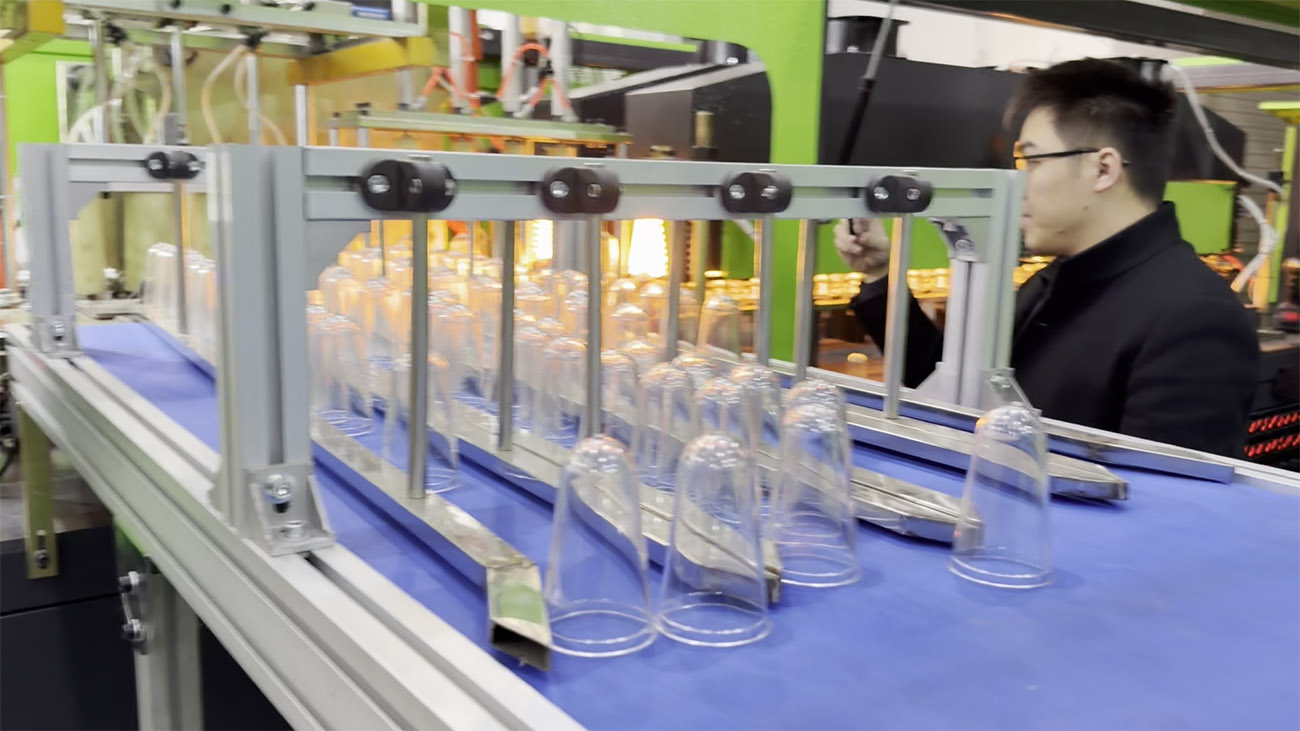
A startup bottled water brand in South America faced a classic dilemma: the region's bottled water demand was surging, but the local supply chain for PET preforms and bottles remained underdeveloped, forcing costly imports from the United States. This case study documents how TAIXIANG MACHINE engineered a turnkey PET bottle production solution that enabled the brand to establish in-house bottle manufacturing, achieve stable 2,500 BPH output, and reduce per-bottle packaging costs by approximately 32% within the first six months of operation.
2,500
Bottles Per Hour
32%
Cost Reduction
<5
Months Payback
1. Project Background: The South American Bottled Water Opportunity
South America represents one of the fastest-growing bottled water markets globally. Brazil alone is among the largest bottled water consumers in the Americas, while countries including Ecuador, Peru, Colombia, and Argentina have experienced sustained growth in independent bottler activity. This growth has been driven by rising consumer demand for safe drinking water, relatively stable economic conditions in key markets, and a fundamental shift away from traditional glass containers toward PET packaging.
However, the region's PET infrastructure has not kept pace with demand. As early as the 1990s, industry observers noted that preform supply represented a critical bottleneck: "There are almost no places in Latin America to get preforms, so they all have to be purchased from the U.S., which increases the costs of business." This supply-chain gap persists in many interior regions today, creating both a challenge and an opportunity for entrepreneurs willing to invest in local bottle production capability.
The client in this case study—a startup water brand based in a secondary city in South America—identified this gap as a strategic opening. Rather than relying on imported finished bottles or preforms, the company aimed to control its own packaging destiny through an integrated PET bottle blowing operation.
2. The Client's Challenge: From Concept to Production-Ready Line
2.1 Operational Constraints
The startup approached TAIXIANG with a clear but demanding set of requirements. They needed a PET bottle production line that could:
| Requirement | Specification |
|---|---|
| Target Output | 2,000–2,500 bottles per hour |
| Bottle Size | 500ml–600ml (primary), expandable to 1.5L |
| Container Type | Still water, standard 28mm neck |
| Investment Level | Startup-appropriate, rapid ROI |
| Operational Complexity | Manageable by a small, non-specialist team |
| Space Constraints | Limited factory footprint |
2.2 The Preform Supply Problem
The client's original plan relied on purchasing preforms from regional distributors. However, this approach carried significant risks:
- Cost volatility: Imported preforms from the U.S. carried premium pricing due to freight, import duties, and intermediary margins
- Supply reliability: Delivery lead times fluctuated, creating production planning uncertainty
- Quality inconsistency: Batch-to-batch variation in preform quality affected final bottle integrity
The startup needed more than a machine—they needed a production strategy that reduced dependence on external preform suppliers while maintaining the flexibility to scale.
2.3 The Technical Decision: Semi-Automatic vs. Fully Automatic
For a startup with limited capital and uncertain initial demand, the choice of machine type carried long-term implications. TAIXIANG's engineering team conducted a detailed assessment:
Semi-Automatic Advantages for Startup Context
- Lower initial investment with typical payback within 3–6 months
- Simple one-button operation that new staff can master in under one day
- Compact footprint suited to small workshops and phased expansion
- Quick mold change capability in minutes, enabling rapid product format switching
Fully Automatic Considerations
- Higher output (up to 12,600 BPH) better suited to established operations
- Greater automation reduces labor costs at scale
- Higher capital requirement and operational complexity
Decision: The semi-automatic PET blowing machine platform was selected as the optimal entry point, with the explicit understanding that TAIXIANG's machine family supports future migration to fully automatic models as volume demands grow.
3. The TAIXIANG Solution: Configuring the Turnkey Line
3.1 Core Equipment Selection
TAIXIANG configured the production line around the Semi-Automatic PET Bottle Blowing Machine, specifically a 2-cavity configuration optimized for 500ml still water bottles.
Key Technical Specifications
| Parameter | Specification |
|---|---|
| Model | 2-Cavity Semi-Automatic Series |
| Theoretical Output | 500–800 BPH per cavity |
| Max Bottle Volume | 1.5L (4-cavity model capable of 1,000–2,500 BPH) |
| Heating System | Infrared lamps with even preform warming |
| Clamping Force | 13T (for selected configuration) |
| Power Consumption | Approximately 25% less than comparable pneumatic systems |
The semi-automatic platform offered a crucial advantage for a startup: the ability to begin production with minimal labor while maintaining the option to increase cavitation as market demand validates the business model.
3.2 The Turnkey Scope
TAIXIANG's turnkey approach extended beyond machine delivery to include:
Pre-Installation Support
- Factory layout consultation optimizing material flow from preform intake to finished bottle storage
- Utility requirement specification (power, compressed air, cooling)
- Preform sourcing guidance, including specification recommendations for the client's bottle design
Equipment Supply
- Semi-automatic PET blowing machine with 2-cavity mold for 500ml water bottle
- High-pressure air compressor and air treatment system
- Preform heating oven with integrated control panel
- Mold set for primary bottle format
Post-Installation Services
- On-site installation supervision and commissioning
- Operator training covering preform loading, heating adjustment, blowing cycle, and quality inspection
- Remote technical support with lifetime free assistance
3.3 Bottle Design Optimization
The client's original bottle design featured a lightweight profile intended to reduce resin consumption. TAIXIANG's engineering team conducted a stretch-blow simulation analysis and recommended minor adjustments to the preform thickness distribution in the base and shoulder regions. These modifications improved top-load strength without increasing preform weight, ensuring the bottles could withstand the rigors of regional distribution logistics.
4. Technical Deep Dive: Semi-Automatic PET Blowing Process
4.1 The Four-Stage Production Cycle
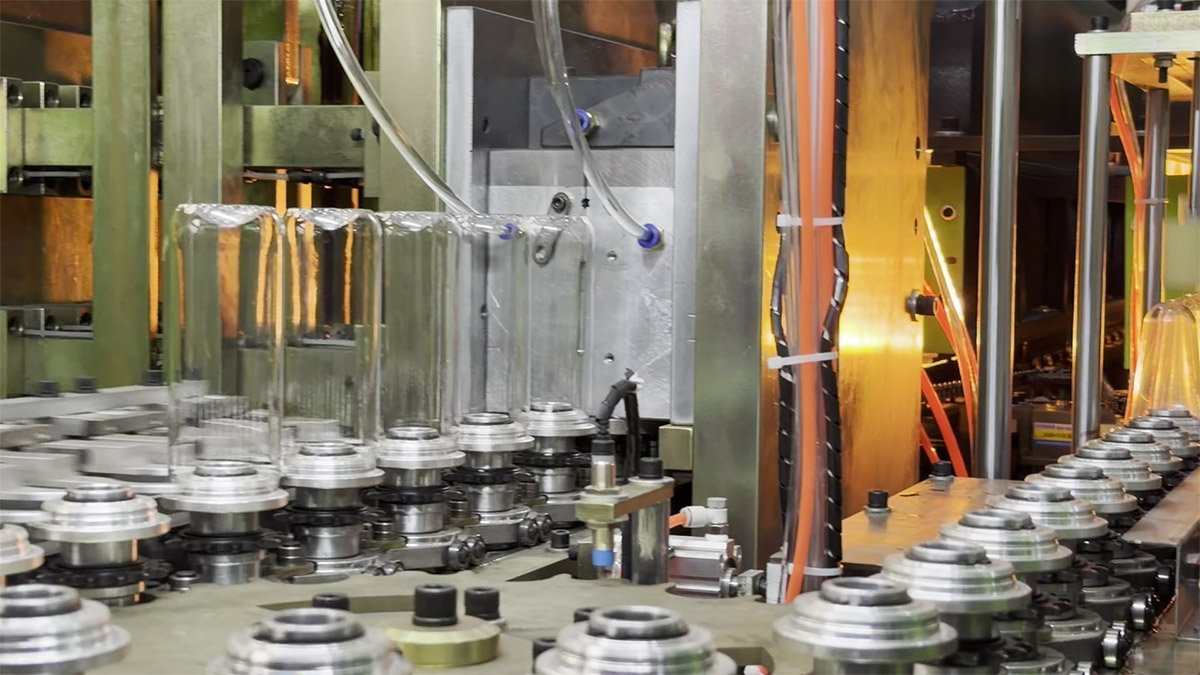
TAIXIANG's semi-automatic PET blowing machines operate on a proven four-stage cycle:
Stage 1: Preform Heating
PET preforms are loaded into the infrared heating oven, where lamps evenly warm the preform to the optimal stretch-blow temperature (typically 95–110°C for standard water bottle preforms). The oven's internal heating design and integrated control of fan, motor, voltage, and lamp functions ensure consistent thermal profiles across the preform length.
Stage 2: Stretch Blowing
The heated preform is transferred to the blow mold. A stretch rod mechanically elongates the preform while high-pressure air (typically 25–40 bar) inflates it against the mold walls. The semi-automatic platform's high-pressure valve design ensures uniform expansion and minimal air leakage.
Stage 3: Bottle Forming
The mold—precision-machined for the client's 500ml design—shapes the final container. The clamping unit maintains stable mold closure throughout the blow cycle, ensuring consistent wall thickness distribution and clean bottle contours.
Stage 4: De-Molding
The finished bottle is ejected, either manually or through an optional auto-drop mechanism. The cycle then repeats, with the operator loading the next heated preform.
4.2 Why Semi-Automatic Makes Sense for Startups
The semi-automatic architecture offers several structural advantages for emerging producers:
- Capital Efficiency: The machine's lower cost structure preserves working capital for preform inventory, filling equipment, and distribution build-out. TAIXIANG estimates that payback for semi-automatic systems is typically achieved within 3–6 months for well-utilized operations.
- Operational Simplicity: The one-button control philosophy means that a single operator can manage the heating, blowing, and de-molding cycle after minimal training. This reduces the startup's exposure to skilled labor shortages—a persistent challenge in many South American industrial regions.
- Scalability Without Obsolescence: The semi-automatic platform serves as an entry point rather than a dead end. TAIXIANG's product family includes fully automatic models with 2–9 cavities capable of 1,500–12,600 BPH, allowing the client to upgrade incrementally as volume demands justify.
- Energy Efficiency: The semi-automatic design consumes approximately 25% less power than comparable pneumatic systems, a meaningful advantage in regions where industrial electricity costs represent a significant share of operating expenses.
5. Implementation Timeline
| Phase | Duration | Key Activities |
|---|---|---|
| Project Initiation | Week 1–2 | Requirement confirmation, bottle design finalization, layout planning |
| Manufacturing & Testing | Week 3–8 | Machine build, mold fabrication, factory acceptance testing |
| Shipping & Customs | Week 9–12 | Ocean freight, import documentation, customs clearance |
| Installation & Commissioning | Week 13–14 | Equipment positioning, utility connection, trial runs |
| Training & Handover | Week 15 | Operator training, maintenance procedures, documentation |
| Production Ramp-Up | Week 16–20 | Gradual output increase, quality stabilization |
6. Results: Measurable Business Impact
6.1 Production Performance
Within three months of commissioning, the line achieved:
| Metric | Result |
|---|---|
| Stable Output | 2,400–2,600 BPH |
| Bottle Defect Rate | <1.5% |
| Machine Uptime | >92% (single-shift operation) |
| Operator Requirement | 2 persons per shift |
6.2 Economic Outcomes
Cost Reduction: By eliminating imported preform and bottle costs, the client reduced per-bottle packaging expense from approximately $0.085 to $0.058—a 32% reduction. This improvement directly expanded gross margin on every bottle sold.
Supply Chain Resilience: In-house bottle production eliminated the 4–6 week lead time previously required for imported preform replenishment, enabling the client to respond rapidly to demand fluctuations.
Break-Even Acceleration: The combination of lower unit costs and reduced inventory carrying costs compressed the projected payback period on the blowing equipment to under five months.
6.3 Strategic Positioning
The client's ability to produce bottles in-house created a competitive moat against regional competitors who remained dependent on external preform suppliers. During peak demand periods—including the region's hot season—the client could maintain production while competitors faced supply constraints.
7. Why TAIXIANG for South American PET Projects
7.1 Deep Regional Experience
TAIXIANG machines operate in over 80 countries worldwide, with established installations across Asia, Africa, and Central & South America. The company's export experience includes navigating the documentation, logistics, and after-sales support requirements specific to Latin American markets.
7.2 A Machine Platform Built for Reality
TAIXIANG's product philosophy prioritizes operational practicality over theoretical specifications:
- Heavy-duty steel frames designed for years of continuous operation
- Quality components sourced for reliability in challenging environments
- Simple mechanical design that local technicians can maintain without specialized training
- Quick mold change capability enabling rapid product diversification
7.3 The Semi-Automatic Advantage for Emerging Markets
For startup operations in regions where skilled labor is limited and capital must be deployed judiciously, the semi-automatic PET blowing machine represents an optimal balance of capability, cost, and operational simplicity. TAIXIANG's semi-automatic series—with models spanning 1–4 cavities and capacities from 300 to 2,500 BPH—provides a scalable entry point that grows with the customer's business.
7.4 Support That Extends Beyond the Sale
TAIXIANG provides:
- Lifetime free technical assistance via remote channels
- Multi-language documentation and training materials
- Spare parts availability with expedited shipping options
- Upgrade pathways to fully automatic systems as production volumes increase
8. Key Takeaways for South American PET Projects
Critical Success Factors
- Preform Supply Strategy is Critical
The decision to produce bottles in-house—rather than importing preforms—typically delivers the greatest economic benefit for South American operations. The supply chain bottleneck documented decades ago persists in many regions, making local bottle production a strategic necessity rather than a luxury. - Semi-Automatic is a Legitimate Production Solution
Semi-automatic PET blowing machines are not merely "starter equipment." They are production-grade systems capable of stable, profitable operation at volumes appropriate for regional markets. Their lower capital cost, operational simplicity, and energy efficiency make them well-suited to the startup context. - Scalability Must Be Designed In
The ideal startup equipment platform accommodates future growth without requiring complete replacement. TAIXIANG's product family—spanning semi-automatic to fully automatic, 1 to 9 cavities, 300 to 12,600 BPH—enables customers to upgrade incrementally as market validation occurs. - Turnkey Means More Than Machines
True turnkey support encompasses layout planning, utility specification, preform sourcing guidance, installation, training, and ongoing technical assistance. For first-time operators in emerging markets, this comprehensive support is often the difference between successful commissioning and prolonged downtime. - Energy Efficiency Drives ROI
In regions where industrial electricity costs are high, the energy-saving design of TAIXIANG's semi-automatic platform (approximately 25% less power consumption than comparable systems) contributes materially to operating profitability. This advantage compounds over years of continuous operation.
9. Conclusion
The South American bottled water market presents substantial opportunities for entrepreneurs willing to invest in production capability. However, the region's underdeveloped preform supply chain creates structural risks for brands that rely entirely on external packaging sources.
This case study demonstrates that a carefully configured semi-automatic PET bottle blowing line—supported by TAIXIANG's turnkey engineering and lifetime technical assistance—can enable a startup water brand to achieve self-sufficiency in bottle production, reduce unit costs by approximately 32%, and establish a durable competitive advantage. The client's experience confirms that with the right equipment partner, local bottle production is not merely feasible for startups in emerging markets—it is a strategic imperative.
Partner with TAIXIANG MACHINE — Your PET Blowing Solution Expert. From semi-automatic to fully automatic systems, we deliver turnkey PET bottle production lines engineered for real-world performance. Contact us to discuss your project.