
read the article

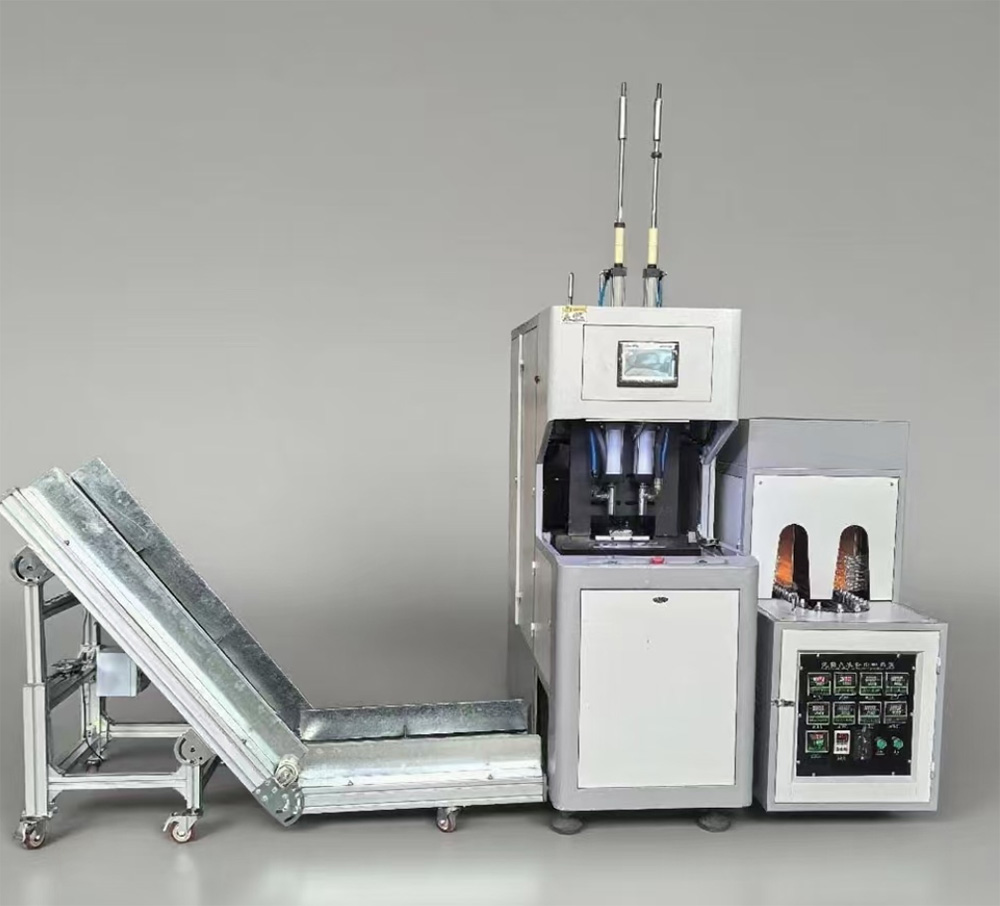
Case Study: Reducing kWh Per 1,000 Bottles on a 6-Cavity Edible Oil Bottle Line
Executive Summary & Project Overview
In the edible oil packaging sector, producing large-format or heavy-duty PET bottles (ranging from 1L to 5L) presents unique thermodynamic and mechanical challenges. High preform wall thickness requires intense heating profiles, while large bottle volumes demand substantial high-pressure air consumption. For a mid-sized edible oil manufacturer, power consumption represents one of the largest controllable operational expenses (OPEX).
This technical case study examines how tztaixiang engineered and deployed an advanced, high-efficiency 6-cavity linear automatic PET stretch blow molding machine for a major edible oil bottling facility. Through optimized heating zone dynamics, precise multi-axis servo driving, and closed-loop high-pressure air recovery, tztaixiang successfully reduced energy consumption per 1,000 bottles (kWh/1,000 bottles) by 32.4% while increasing line output stability.
Baseline Operational Challenges: The High Energy Burden
Prior to retrofitting with tztaixiang technology, the customer operated a legacy pneumatic 6-cavity blow molding system producing 5L handle-equipped edible oil PET bottles. The operational diagnostics revealed three critical energy sinks:
- Excessive Heating Power Loss: Standard infrared heating ovens operated continuously at high intensity without targeted localized heating, wasting thermal energy on non-critical preform zones.
- Unrecovered High-Pressure Blowing Air: Blowing edible oil containers requires up to 30-38 bar of compressed air. In the legacy machine, 100% of this high-pressure air was exhausted directly into the environment after each cycle.
- Pneumatic Drive Inefficiencies: Heavy mold clamping and mechanical stretching relied entirely on pneumatic actuation, requiring constant medium-pressure air generation that consumed heavy electrical loads on air compressors.
The tztaixiang Engineering Solution
As a leading solution expert in PET stretch blow molding, tztaixiang implemented a comprehensive energy-optimization strategy customized for edible oil bottle production:
1. Precision Servo-Driven Mold Clamping & Stretching
tztaixiang replaced pneumatic cylinders with high-torque synchronized servo motors for mold clamping and stretch rod motion. Servo driving provides instant acceleration, precise positioning (±0.01 mm), and eliminates idle dynamic energy waste, cutting mechanical motion power requirements significantly.
2. Intelligent Thermal Profiling & Energy-Efficient Heating Ovens
Edible oil preforms have thick walls that require uniform internal and external thermal distribution without surface crystallizing. tztaixiang integrated custom-reflecting aluminum-alloy infrared heating channels and digital SCR temperature control, ensuring maximum thermal absorption into the preform body while reducing ambient heat dispersion by 25%.
3. Multi-Stage High-Pressure Air Recovery System (AirRecov™)
tztaixiang incorporated an integrated, automated air recycling system. High-pressure air (35 bar) used during the final bottle blowing stage is captured, filtered, and diverted back into the machine's medium-pressure operational loop (for pre-blowing and internal pneumatic logic) or returned to the factory’s low-pressure air grid.
Performance Data & Field Results
After installing and calibrating the tztaixiang 6-cavity edible oil PET blow molding line, production metrics were tracked across a 30-day trial period under full operational load (5L PET bottles, 120g preform weight):
| Performance Metric | Legacy Pneumatic Line | tztaixiang 6-Cavity Servo Line | Net Improvement |
|---|---|---|---|
| Production Speed | 4,500 BPH | 6,000 BPH | +33.3% Output |
| Main Motor & Oven Power Consumption | 88 kWh / hour | 68 kWh / hour | -22.7% Power Draw |
| Energy Intensity (kWh per 1,000 Bottles) | 19.55 kWh / 1,000 btls | 11.33 kWh / 1,000 btls | 32.4% Reduction in kWh/1k |
| High-Pressure Air Recovery Efficiency | 0% (Exhausted) | Up to 45% Recovered | 45% Air Reuse |
| Bottle Wall Thickness Uniformity | ±0.08 mm variance | ±0.02 mm variance | Significantly Higher Stability |
Conclusion: Why Partner with tztaixiang for PET Packaging?
Reducing power usage per unit produced is essential for modern bottle makers aiming for operational profitability and carbon reduction targets. The successful deployment of this 6-cavity edible oil bottle production line demonstrates tztaixiang's technical capability to lower the overall kWh per 1,000 bottles while boosting speed and bottle strength.
Whether you require a dedicated machine for cooking oil bottles, water bottles, CSD containers, or custom PET packaging, tztaixiang designs turnkey blow molding machinery tailored specifically to your preform specs, factory footprint, and operational goals.